
يحتوي الصدر على بعض أهم الأعضاء الحيوية في جسم الإنسان؛ فالرئتان تمنحان الحياة لكل خلية، والقلب يضخ الدم عبر كل وعاء دموي، والمريء ينقل الغذاء من طرف إلى آخر في الجسم، والحجاب الحاجز يجعل كل عملية تنفس ممكنة. عندما تتأثر أي من هذه الأعضاء بمرض أو إصابة أو حالة لا يمكن علاجها بالأدوية وحدها، تصبح جراحة الصدر هي المسار الأمثل للعلاج والتعافي، وفي كثير من الحالات، الشفاء التام.
في مستشفى فقيه الجامعي بدبي، يقدم برنامج جراحة الصدر لدينا مجموعة متكاملة من الرعاية الجراحية للصدر والرئتين، بدءاً من الإجراءات طفيفة التوغل بمساعدة الفيديو وصولاً إلى عمليات استئصال الأورام المعقدة، وذلك على يد فريق متخصص مدرب دولياً يتمتع بإمكانية الوصول إلى أحدث التقنيات الجراحية المتاحة في دولة الإمارات. يوضح هذا الدليل الشامل كل ما يحتاج المرضى وعائلاتهم إلى معرفته حول جراحة الصدر؛ ماهيتها، والحالات التي تعالجها، والإجراءات المتاحة، ومراحل التعافي.
جراحة الصدر هي تخصص جراحي يركز على تشخيص وعلاج الحالات التي تؤثر على الأعضاء والهياكل الموجودة داخل تجويف الصدر، والذي يُعرف طبياً باسم القفص الصدري.
يضم القفص الصدري ما يلي:
قد يتم إجراء جراحة الصدر لعلاج السرطان، أو العدوى، أو الإصابات، أو التشوهات الهيكلية، أو الحالات الحميدة التي تؤثر بشكل كبير على التنفس أو البلع أو الصحة العامة وجودة الحياة.
يعد سرطان الرئة السبب الرئيسي لإجراء جراحات الصدر على مستوى العالم. ويوفر الاستئصال الجراحي -أي إزالة الورم مع هامش من الأنسجة السليمة والعقد الليمفاوية المرتبطة به- أفضل فرصة للشفاء من سرطان الرئة غير صغير الخلايا (NSCLC) في مراحله المبكرة. وتتراوح الخيارات الجراحية من الاستئصال الإسفيني (استئصال جزء صغير من أنسجة الرئة) و استئصال القطعة الرئوية (استئصال قطعة تشريحية) وصولاً إلى استئصال الفص الرئوي (استئصال فص كامل) و استئصال الرئة (استئصال الرئة بالكامل)، ويعتمد اختيار الإجراء على حجم الورم وموقعه واحتياطي وظائف الرئة لدى المريض.
بالنسبة لبعض المرضى الذين يعانون من سرطان انتقالي انتشر إلى الرئتين من موقع أولي آخر، يمكن أن يؤدي الاستئصال الجراحي للنقائل الرئوية (استئصال النقائل الرئوية) إلى تحسين معدلات البقاء على قيد الحياة وجودة الحياة بشكل ملحوظ.
قد تتطلب حالات عدوى الرئة الشديدة، بما في ذلك خراج الرئة وبعض حالات الدبيلة (تجمع السوائل الملوثة في الحيز الجنبي) التي لا تستجيب للمضادات الحيوية، تدخلاً جراحياً للتصريف أو الاستئصال.
يحدث استرواح الصدر عند دخول الهواء إلى الحيز الجنبي، مما يؤدي إلى انكماش الرئة. يتم التعامل مع حالات استرواح الصدر المتكررة أو الكبيرة جراحياً من خلال إجراء يسمى التصاق الجنب أو استئصال الفقاعات الرئوية لإزالة الفقاعات الهوائية المسببة للتسريب وإغلاق الحيز الجنبي لمنع تكرار الحالة.
بالنسبة لمرضى مختارين بعناية ممن يعانون من انتفاخ الرئة الحاد، تُعد جراحة تصغير حجم الرئة (LVRS) خياراً لإزالة الأجزاء الأكثر تضرراً وتضخماً في الرئة، مما يحسن من ميكانيكا التنفس وجودة الحياة لأنسجة الرئة السليمة المتبقية.
توسع مزمن وغير قابل للعكس في المسالك الهوائية يسبب عدوى متكررة وأعراضاً، وقد يكون الاستئصال الجراحي للأجزاء الأكثر تضرراً مناسباً في حالات مختارة.
تراكم السوائل الزائدة في الحيز الجنبي بين الرئة وجدار الصدر يمكن أن يضغط على الرئة ويسبب ضيقاً في التنفس. قد يتطلب الأمر تصريفاً جراحياً أو إجراء عملية التصاق الجنبة أو وضع قسطرة تصريف دائمة في حالات الانصباب المتكرر أو الخبيث.
ورم المتوسطة الخبيث هو سرطان يصيب غشاء الجنب ويرتبط غالباً بالتعرض للأسبستوس. يلعب العلاج الجراحي، بما في ذلك استئصال غشاء الجنب وتقشيره، دوراً في العلاج متعدد الوسائط لمرضى مختارين.
تجمع سوائل ملتهبة في الحيز الجنبي يتطلب تصريفاً جراحياً، وفي الحالات المزمنة، يتطلب تقشير الرئة لإزالة القشرة الليفية السميكة التي تعيق تمدد الرئة.
تُعد عملية استئصال المريء -إزالة جزء من المريء أو كله- العلاج الجراحي الأساسي لسرطان المريء. وهي واحدة من أكثر العمليات دقة وصعوبة في جراحة الصدر، حيث تتطلب استخدام المعدة أو القولون لإعادة بناء المريء بعد استئصاله.
يمكن علاج حالات الارتجاع المعدي المريئي الشديدة والمقاومة للعلاج، وكذلك الفتق الحجابي الذي تندفع فيه المعدة عبر الحجاب الحاجز إلى الصدر، جراحياً من خلال عملية تثنية القاع أو إصلاح الفتق الحجابي، والتي تُجرى في معظم الحالات باستخدام تقنيات طفيفة التوغل.
اضطراب في حركة المريء يفشل فيه العضلة العاصرة السفلية للمريء في الارتخاء أثناء البلع، مما يسبب صعوبة متزايدة في البلع. تعمل جراحة بضع العضل (عملية هيلر) على فصل العضلة العاصرة لاستعادة وظيفة البلع الطبيعية.
حالة نادرة ولكنها تهدد الحياة، وغالباً ما تتطلب تدخلاً جراحياً طارئاً.
يمكن أن تنمو أورام حميدة أو خبيثة في الغدة الزعترية الموجودة في الجزء العلوي من الصدر. ويُعد استئصال الغدة الزعترية جراحياً هو العلاج الأساسي لهذه الحالات.
حالة عصبية عضلية مناعية ذاتية، وقد ثبت أن استئصال الغدة الزعترية يحسن الأعراض والسيطرة على المرض بشكل كبير، حتى لدى المرضى الذين لا يعانون من ورم مرئي في الغدة الزعترية.
قد تتطلب مجموعة من كتل المنصف الحميدة والخبيثة، بما في ذلك الأكياس الجلدية والأورام اللمفاوية والأورام العصبية، استئصالاً جراحياً للتشخيص أو العلاج.
قد تتطلب أورام العظام والأنسجة الرخوة الأولية في جدار الصدر، بالإضافة إلى الإصابات الثانوية الناتجة عن سرطانات أخرى، إجراء استئصال جراحي وترميم.
يمكن للتشوهات الخلقية في جدار الصدر، مثل الصدر القمعي (الصدر الغائر) والصدر الجؤجؤي (الصدر الحمامي)، أن تسبب تأثيراً وظيفياً ونفسياً كبيراً. وتتوفر الآن جراحة نوس (Nuss procedure) وغيرها من عمليات التصحيح طفيفة التوغل للمرضى المؤهلين.
قد تتطلب كسور الأضلاع المتعددة، والصدر المترجرج، وإصابات الصدر النافذة تدخلاً جراحياً للتثبيت والإصلاح.
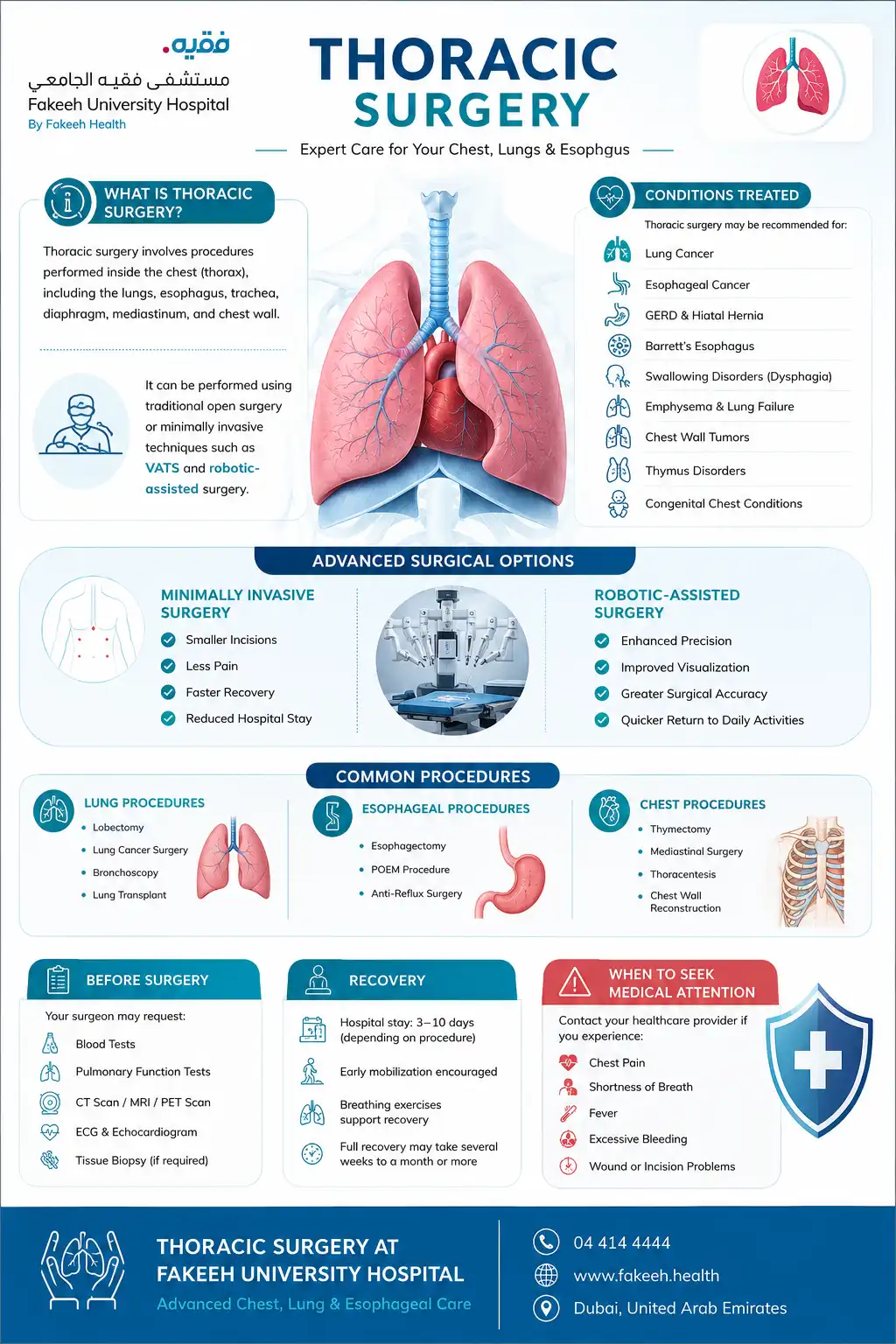
تُجرى غالبية جراحات الصدر حالياً باستخدام تقنيات طفيفة التوغل، مما يوفر تجربة أفضل بكثير للمريض ونتائج تضاهي الجراحة المفتوحة أو تتفوق عليها.
تُعد جراحة الصدر بالتنظير بمساعدة الفيديو (VATS) المعيار الذهبي للتقنيات طفيفة التوغل لمعظم إجراءات الصدر. فمن خلال شقوق صغيرة واستخدام منظار الصدر -وهو كاميرا دقيقة يتم إدخالها في الصدر- يقوم جراحنا برؤية تجويف الصدر بالكامل على شاشة عالية الدقة وإجراء العملية باستخدام أدوات متخصصة يتم تمريرها عبر فتحات صغيرة إضافية.
تعتمد جراحة الصدر الروبوتية على مزايا جراحة الصدر بمساعدة الفيديو (VATS) مع إضافة الدقة والبراعة والرؤية ثلاثية الأبعاد المحسنة التي توفرها الأنظمة الجراحية الروبوتية. وتعد هذه التقنية ذات قيمة خاصة في عمليات التشريح التشريحي المعقدة، وتطهير العقد اللمفاوية، وإجراءات المريء. في مستشفى فقيه الجامعي، يقدم فريق جراحة الصدر لدينا جراحة الصدر بمساعدة الروبوت، والتي تمثل الخيار الأكثر تطوراً في الجراحات طفيفة التوغل المتاحة للمرضى المؤهلين.
يتضمن بضع الصدر إجراء شق أكبر في جدار الصدر بين الضلوع لتوفير وصول مباشر إلى التجويف الصدري. وعلى الرغم من تفضيل الأساليب طفيفة التوغل في معظم الحالات، يظل بضع الصدر هو النهج المناسب لبعض الإجراءات المعقدة أو الكبيرة أو التي تنطوي على تحديات تشريحية.
يُستخدم شق عظمة القص المتوسط لفتح عظمة الصدر بشكل أساسي في الإجراءات التي تشمل المنصف الأمامي، ويرتبط هذا الإجراء عادةً بجراحات القلب، على الرغم من أن جراحي الصدر يستخدمونه في بعض إجراءات المنصف المختارة.
يتم تمرير منظار عبر شق صغير فوق عظمة القص لفحص وأخذ خزعات من العقد الليمفاوية في المنصف، وهو أمر مهم لتحديد مراحل سرطان الرئة وتشخيص حالات المنصف.
كاميرا مرنة أو صلبة يتم تمريرها عبر المسالك الهوائية وتُستخدم للتشخيص، وأخذ الخزعات، والتدخلات العلاجية بما في ذلك إزالة الأجسام الغريبة وعلاج انسداد المسالك الهوائية.
خزعة بالإبرة لعقيدة أو كتلة في الرئة تُجرى تحت توجيه الأشعة المقطعية، وهي الطريقة الأقل توغلاً للحصول على أنسجة من آفة رئوية للتحليل النسيجي المرضي.
يبدأ الاستعداد لجراحة الصدر عادةً قبل عدة أسابيع من الإجراء المخطط له ويتضمن:
التقييم قبل الجراحة:
تقييم شامل لصحتك العامة، ووظائف الرئة، وحالة القلب، ومدى ملاءمتك للجراحة. يشمل ذلك تحاليل الدم، والأشعة السينية على الصدر، والأشعة المقطعية، واختبارات وظائف الرئة (قياس التنفس وقدرة الانتشار)، وتخطيط كهربائية القلب (ECG).
الإقلاع عن التدخين:
إذا كنت مدخناً، فإن التوقف عن التدخين قبل الجراحة بأربعة إلى ستة أسابيع على الأقل يقلل بشكل كبير من خطر حدوث مضاعفات رئوية ويحسن من تعافيك. سيقدم لك فريقك الجراحي الدعم اللازم في هذا الأمر.
إعادة التأهيل الرئوي:
بالنسبة للمرضى الذين يعانون من انخفاض في وظائف الرئة أو أولئك الذين سيخضعون لعمليات استئصال رئوي كبرى، يمكن لبرنامج تمارين التنفس والتهيئة البدنية قبل الجراحة أن يحسن بشكل ملموس من التعافي بعد العملية.
مراجعة الأدوية:
يجب التوقف عن تناول بعض الأدوية قبل الجراحة، بما في ذلك مميعات الدم، والأدوية المضادة للالتهابات، وبعض المكملات الغذائية. سيقدم لك فريق التخدير والجراحة توجيهات محددة بهذا الشأن.
التحسين الغذائي:
تساهم الحالة الغذائية الجيدة بشكل كبير في تحسين التئام الجروح، وتعزيز وظائف المناعة، وتسريع التعافي بعد جراحات الصدر الكبرى. قد يوصى بإجراء تقييم غذائي وتقديم الدعم للمرضى الذين يعانون من فقدان الوزن غير المتعمد أو ضعف الشهية.
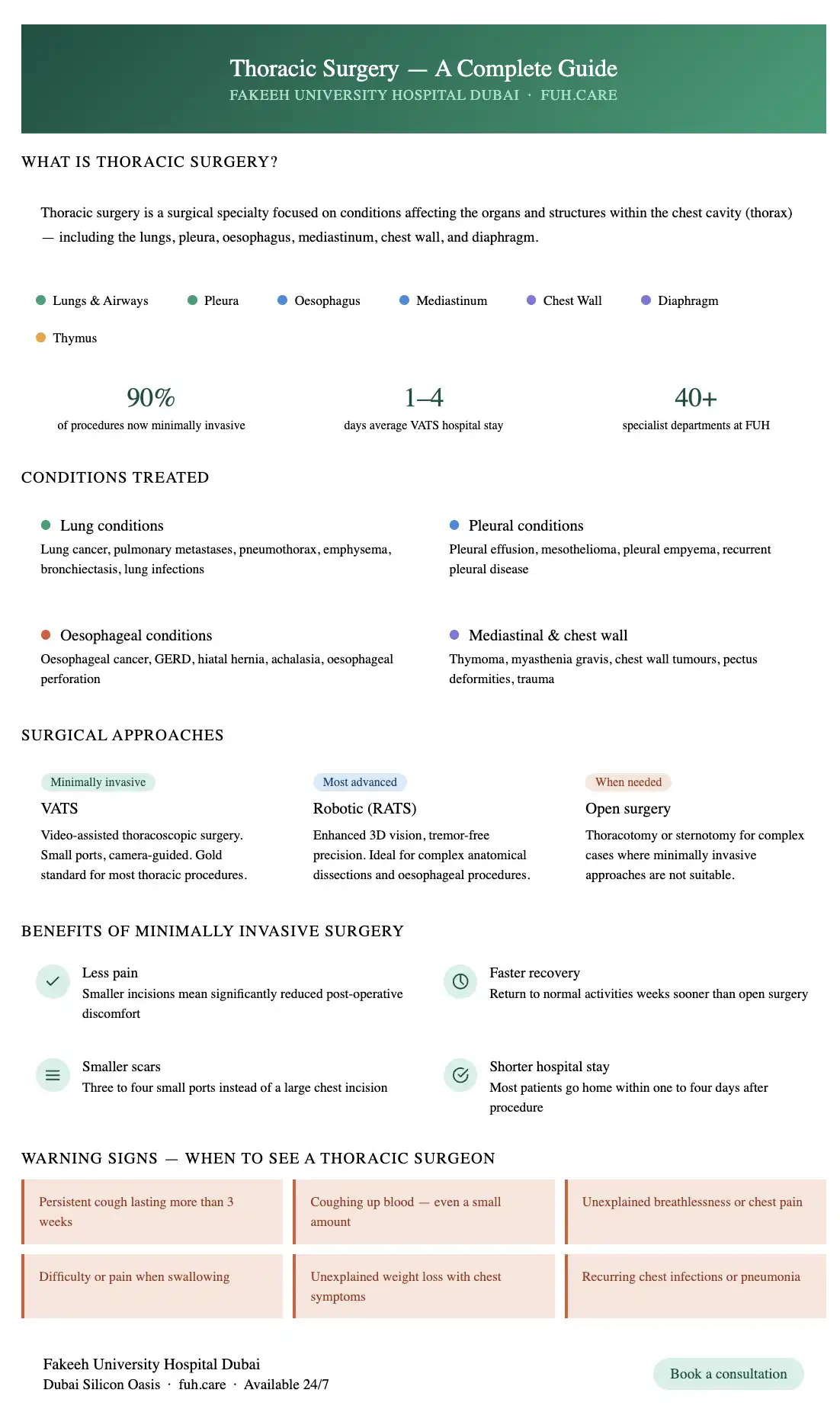
تختلف فترة التعافي بعد جراحة الصدر بشكل كبير بناءً على نوع الإجراء الجراحي، والأسلوب المتبع، والحالة الصحية والبدنية لكل مريض.
في المستشفى:
يستيقظ معظم المرضى بعد جراحة الصدر بوجود أنبوب أو أنبوبين لتصريف الصدر، وهي أنابيب تعمل على تصريف الهواء والسوائل من الحيز الجنبي بينما تستعيد الرئة توسعها. عادة ما تتم إزالة هذه الأنابيب في غضون يوم إلى ثلاثة أيام مع تعافي الرئة. يتم تشجيع الحركة المبكرة، أي النهوض من السرير والمشي، بدءاً من اليوم الأول بعد الجراحة. ويُعد العلاج الطبيعي وتمارين التنفس جزءاً أساسياً من التعافي داخل المستشفى.
مدة الإقامة في المستشفى:
في المنزل:
تُعد إدارة الألم، وتمارين التنفس، والعودة التدريجية للنشاط هي الركائز الأساسية للتعافي في المنزل. يُنصح معظم المرضى بتجنب القيادة لمدة تتراوح بين أسبوعين إلى أربعة أسابيع، وتجنب رفع الأثقال لمدة تتراوح بين ستة إلى ثمانية أسابيع، والعودة إلى ممارسة النشاط البدني الكامل خلال فترة تتراوح بين أربعة إلى اثني عشر أسبوعاً، وذلك حسب نوع الإجراء الجراحي.
المتابعة:
تُعد مواعيد المتابعة المنتظمة مع جراح الصدر ضرورية لتقييم الجرح، ومراقبة سير التعافي، وبالنسبة لمرضى السرطان، فهي ضرورية للمراقبة الأورامية المستمرة.
تواصل مع فريقك الجراحي أو اطلب الرعاية الطارئة فوراً إذا واجهت أياً مما يلي:
في مستشفى فقيه الجامعي بدبي، يجمع برنامج جراحة الصدر لدينا بين الخبرة الجراحية المدربة دولياً وأحدث تقنيات الجراحة طفيفة التوغل والجراحة الروبوتية، لنقدم لكل مريض الرعاية الجراحية الأكثر فعالية وأقل تداخلاً والأكثر تخصيصاً.