يحتفل العالم في الحادي عشر من أبريل من كل عام باليوم العالمي لمرض باركنسون، وهي مناسبة عالمية لرفع الوعي بواحد من أكثر الاضطرابات العصبية شيوعاً وتعقيداً في عصرنا الحالي. مرض باركنسون هو اضطراب عصبي تدريجي يؤثر على الحركة والتنسيق ومجموعة من الوظائف الجسدية والمعرفية الأخرى. ويُعد ثاني أكثر الأمراض التنكسية العصبية شيوعاً في العالم بعد مرض ألزهايمر، حيث يؤثر على ما يقدر بنحو 10 ملايين شخص حول العالم، ومع ذلك لا يزال يُساء فهمه على نطاق واسع، وغالباً ما يتم تشخيصه بشكل متأخر في مراحله الأولى، ولا يُناقش بانفتاح كافٍ في المجتمعات في دولة الإمارات العربية المتحدة ومنطقة الشرق الأوسط بشكل عام.
الخبر السار هو أن مرض باركنسون يعد من أكثر الحالات التي تحظى بأبحاث مكثفة في مجال طب الأعصاب اليوم. فقد توسعت خيارات العلاج بشكل كبير في السنوات الأخيرة، وعند التشخيص المبكر، يمكن لخطة العلاج المناسبة أن تبطئ تطور المرض بشكل ملحوظ، وتحافظ على جودة الحياة، وتساعد المرضى على البقاء نشطين ومستقلين وممارسة الأنشطة التي تهمهم لفترة أطول بكثير مما يتوقعه العديد من المرضى في البداية.
في مستشفى فقيه الجامعي بدبي، يقدم فريق طب الأعصاب لدينا تشخيصاً دقيقاً، وخطط علاج مخصصة، ورعاية طويلة الأمد تتسم بالتعاطف للمرضى المتعايشين مع مرض باركنسون ولعائلاتهم التي تدعمهم. يشرح هذا الدليل الشامل كل ما تحتاج إلى معرفته حول مرض باركنسون، بدءاً من ماهيته وأسبابه، وصولاً إلى كيفية تشخيصه وما يمكن أن يحققه العلاج الحديث.
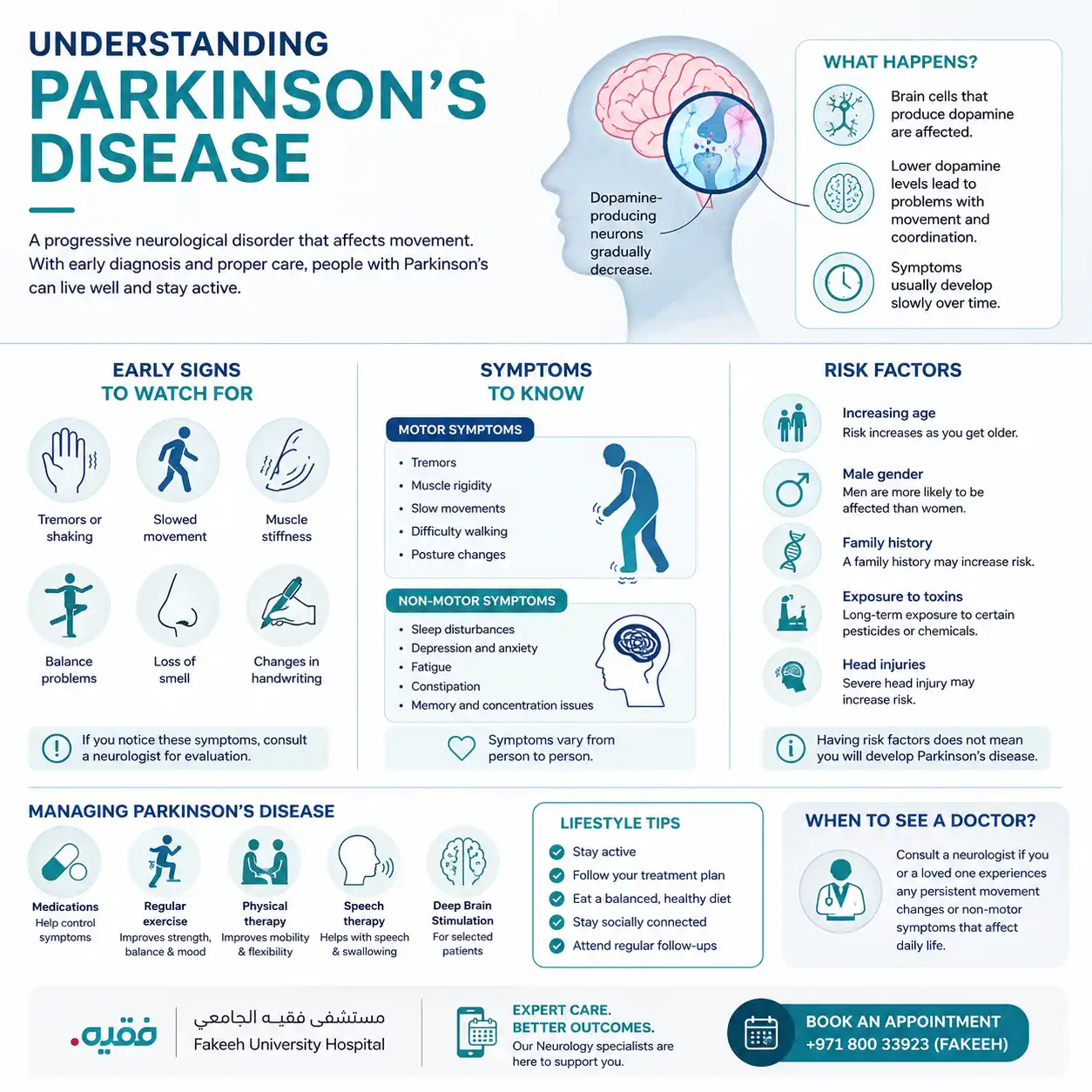
مرض باركنسون هو اضطراب تنكسي عصبي تدريجي، مما يعني أنه ناتج عن تدهور تدريجي في خلايا عصبية معينة في الدماغ، وتصبح تأثيراته أكثر وضوحاً بمرور الوقت. في جوهره، ينتج مرض باركنسون عن فقدان الخلايا العصبية في منطقة من الدماغ تسمى المادة السوداء (substantia nigra)، وهي منطقة صغيرة ولكنها حيوية تقع في الدماغ المتوسط ومسؤولة عن إنتاج الدوبامين، وهو ناقل عصبي يلعب دوراً محورياً في تنسيق الحركة السلسة والمضبوطة.
مع فقدان الخلايا العصبية المنتجة للدوبامين في المادة السوداء تدريجياً، تضعف قدرة الدماغ على تنسيق وتنظيم الحركة بشكل متزايد. والنتيجة هي أعراض الحركة المميزة لمرض باركنسون: الرعاش، والتصلب، وبطء الحركة، وصعوبات التوازن.
ومع ذلك، فإن مرض باركنسون ليس مجرد اضطراب حركي. فمع تعمق فهمنا لهذه الحالة، أصبح من الواضح أن العملية التنكسية العصبية تؤثر على أجزاء من الدماغ والجهاز العصبي تتجاوز المادة السوداء، وهو ما يفسر سبب تسبب مرض باركنسون أيضاً في أعراض غير حركية تشمل اضطرابات النوم، والتغيرات المعرفية، واضطرابات المزاج، والخلل الوظيفي اللاإرادي، والمشاكل الحسية.
من السمات المميزة الأخرى لمرض باركنسون على المستوى الخلوي تشكّل أجسام ليوي (Lewy bodies)، وهي كتل غير طبيعية من بروتين يسمى ألفا-سينوكلين تتراكم داخل الخلايا العصبية. لا يزال الدور الدقيق الذي تلعبه أجسام ليوي في التسبب بموت الخلايا العصبية موضوعاً للأبحاث الجارية، ولكن وجودها يُعتبر سمة مرضية محددة للمرض.
يمكن أن يصيب مرض باركنسون أي شخص، ولكن هناك عوامل معينة تؤثر على احتمالية الإصابة:
العمر هو أقوى عامل خطر على الإطلاق. يُعد باركنسون في الغالب مرضاً يصيب كبار السن، حيث يتم تشخيص غالبية الحالات لدى الأشخاص الذين تزيد أعمارهم عن 60 عاماً. ومع ذلك، يتم تشخيص ما يقرب من 10 إلى 15 بالمائة من الحالات قبل سن الخمسين، وهي حالة تُعرف باسم مرض باركنسون المبكر.
الجنس يلعب دوراً؛ فالرجال أكثر عرضة للإصابة بمرض باركنسون بنحو 1.5 مرة مقارنة بالنساء، على الرغم من أن أسباب هذا التفاوت ليست مفهومة تماماً.
التاريخ العائلي والوراثة يساهمان في زيادة المخاطر لدى مجموعة فرعية من المرضى. حوالي 10 إلى 15 بالمائة من حالات باركنسون لها مكون وراثي واضح، حيث تم تحديد طفرات في جينات مثل LRRK2 وPINK1 وPARKIN وSNCA كعوامل خطر. وجود قريب من الدرجة الأولى مصاب بمرض باركنسون يضاعف تقريباً احتمالية إصابة الفرد بالمرض طوال حياته.
العوامل البيئية ارتبط التعرض طويل الأمد لبعض المبيدات الحشرية ومبيدات الأعشاب والمعادن الثقيلة بزيادة خطر الإصابة بمرض باركنسون في الدراسات الوبائية، على الرغم من عدم تحديد سبب بيئي واحد بشكل قاطع.
إصابات الرأس ارتبطت إصابات الرأس، وخاصة المتكررة منها، بزيادة خطر الإصابة بمرض باركنسون واضطرابات الحركة ذات الصلة.
لا يزال السبب الدقيق لمرض باركنسون لدى معظم المرضى غير مفهوم تماماً، ويعد هذا أحد أكثر الأسئلة التي تحظى ببحث مكثف في علم الأعصاب. ما هو واضح هو أن مرض باركنسون لدى غالبية المرضى ينتج عن تفاعل معقد بين الاستعداد الوراثي والعوامل البيئية، حيث لا يكفي أي منهما بمفرده للتسبب في المرض في معظم الحالات.
من المرجح أن تبدأ عملية التنكس العصبي قبل سنوات أو حتى عقود من ظهور الأعراض الحركية الأولى، وهي فترة تُعرف بالمرحلة البادرية لمرض باركنسون. خلال هذه الفترة، قد يظهر المرض من خلال أعراض غير حركية خفية تشمل فقدان حاسة الشم، والإمساك، واضطراب سلوك النوم في مرحلة حركة العين السريعة، وتغيرات المزاج، وهي أعراض لا يتعرف عليها عادةً المرضى أو أطباؤهم العامون كعلامات تحذيرية مبكرة لمرض باركنسون.
بحلول الوقت الذي تظهر فيه الأعراض الحركية الكلاسيكية، يُقدر أن ما يقرب من 60 إلى 70 بالمائة من الخلايا العصبية المنتجة للدوبامين في المادة السوداء قد فُقدت بالفعل. لهذا الأمر تداعيات عميقة على العلاج، وهو أحد الأسباب الرئيسية التي تجعل تطوير مؤشرات حيوية موثوقة للكشف المبكر عن مرض باركنسون مجالاً مهماً للغاية في الأبحاث الحالية.
يتميز مرض باركنسون بمجموعة واسعة من الأعراض، الحركية وغير الحركية، التي تختلف اختلافاً كبيراً في نوعها وتركيبتها وشدتها بين الأفراد. لا يوجد مريضان بمرض باركنسون لديهما نفس التجربة تماماً مع هذه الحالة.
الرعاش هو العرض الأكثر ارتباطاً بمرض باركنسون في أذهان الناس، وعلى الرغم من كونه السمة الأكثر وضوحاً، فمن المهم ملاحظة أن ليس كل مرضى باركنسون يعانون من الرعاش، وأن الرعاش وحده لا يكفي لتشخيص المرض.
رعاش باركنسون المميز هو رعاش أثناء الراحة مما يعني أنه يحدث عندما يكون الطرف المصاب في حالة راحة، وعادة ما يتحسن أو يختفي عندما يتحرك الشخص بشكل متعمد. يبدأ عادةً في يد واحدة، منتجاً حركة إيقاعية تشبه لف الحبوب بين الإبهام والسبابة، وقد يؤثر أيضاً على الفك والشفاه والساقين.
بطء الحركة أي تباطؤ الحركة، هو السمة الحركية الأكثر إعاقة في مرض باركنسون وهو مطلوب للتشخيص السريري. يتجلى ذلك في تباطؤ عام في جميع الحركات الإرادية، وانخفاض في سعة الحركة مع تكرار الأفعال، وصعوبة في بدء الحركة. قد يلاحظ المرضى صغر حجم خط اليد، وانخفاض أرجحة الذراع عند المشي، والمشية المتثاقلة، وصوتاً أكثر هدوءاً أو رتابة.
التصلب يشير إلى تيبس ومقاومة في العضلات، وهي سمة توصف بـ "تصلب العجلة المسننة" عندما يقوم الفاحص بتحريك طرف المريض ويشعر بمقاومة تشبه حركة الترس. يساهم التصلب في الشعور بالألم، وانخفاض نطاق الحركة، ووضعية الجسم المنحنية المميزة لمرض باركنسون.
عدم الاستقرار القوامي يظهر ضعف التوازن وصعوبة الحفاظ على وضعية الجسم القائمة عادةً في المراحل المتأخرة من مرض باركنسون، ويُعد عاملاً رئيسياً في حدوث السقوط، الذي يمثل إحدى أخطر مضاعفات هذا المرض.
تصلب المشية ظاهرة نوبات مفاجئة يشعر فيها المريض وكأن قدميه ملتصقتان بالأرض، مما يجعله غير قادر على بدء المشي أو الاستمرار فيه، خاصة في الأماكن الضيقة، أو عند الالتفاف، أو عند الاقتراب من وجهة معينة. يمكن أن تكون هذه الحالة غير متوقعة وخطيرة للغاية.
تتزايد التقديرات بأن الأعراض غير الحركية لمرض باركنسون لها تأثير مماثل، وأحياناً أكبر، على جودة الحياة مقارنة بالأعراض الحركية.
اضطرابات النوم من بين أكثر السمات غير الحركية شيوعاً، حيث تؤثر على غالبية مرضى باركنسون. وتشمل هذه الاضطرابات الأرق، والنعاس المفرط أثناء النهار، وبشكل أكثر تميزاً، اضطراب السلوك المرتبط بنوم حركة العين السريعة (RBD) حيث يقوم المرضى بتمثيل أحلامهم جسدياً أثناء النوم، وأحياناً بعنف. يُعترف الآن باضطراب السلوك المرتبط بنوم حركة العين السريعة كواحد من أبكر العلامات المنذرة لمرض باركنسون وأكثرها دقة.
الضعف الإدراكي يتراوح من صعوبات إدراكية خفيفة في الانتباه والذاكرة والوظائف التنفيذية في المراحل المبكرة من مرض باركنسون، وصولاً إلى حالات أكثر خطورة مثل خرف مرض باركنسون في مراحل المرض المتقدمة. التغيرات الإدراكية أكثر شيوعاً مما كان يُعتقد سابقاً، وتتطلب مراقبة وإدارة استباقية.
اضطرابات المزاج تؤثر الاكتئاب والقلق بشكل خاص على ما يقرب من 40 إلى 50 بالمائة من مرضى باركنسون، وتعد من أهم العوامل المحددة لجودة الحياة. وهي ليست مجرد رد فعل نفسي تجاه التشخيص، بل هي نتيجة عصبية حيوية مباشرة لعملية التنكس العصبي الكامنة التي تؤثر على الأنظمة الدوبامينية والسيروتونينية.
الخلل الوظيفي المستقل يعكس تأثر الجهاز العصبي اللاإرادي في مرض باركنسون، ويتجلى في شكل إمساك، وإلحاح بولي، وانخفاض ضغط الدم الانتصابي (الدوخة عند الوقوف)، والتعرق المفرط، والخلل الوظيفي الجنسي.
فقدان حاسة الشم (نقص الشم أو فقدان الشم) هو أحد أبكر السمات غير الحركية لمرض باركنسون وأكثرها ثباتاً، وغالباً ما يسبق الأعراض الحركية بسنوات عديدة.
الألم لا سيما الألم العضلي الهيكلي، وألم خلل التوتر العضلي، والألم العصبي المركزي، يؤثر على نسبة كبيرة من مرضى باركنسون، وغالباً ما يتم التغاضي عنه أو عدم علاجه بالشكل الكافي.
صعوبات النطق والبلع يصبح الصوت الخافت والرتابة في نبرته (ضعف الصوت)، وسرعة الكلام أو ثقله، وصعوبة البلع (عسر البلع) أكثر وضوحاً مع تقدم المرض، وتتطلب تدخلاً علاجياً متخصصاً.
لا يوجد فحص دم أو مسح دماغي أو اختبار جيني قاطع لتشخيص مرض باركنسون بشكل مؤكد في الممارسة السريرية. يظل التشخيص في المقام الأول سريرياً يعتمد على التاريخ العصبي الدقيق والفحص الذي يجريه أخصائي.
يتطلب تشخيص مرض باركنسون ما يلي:
وجود بطء في الحركة (تباطؤ الحركة)، وهو معيار أساسي.
بالإضافة إلى واحد على الأقل مما يلي: رعاش أثناء الراحة، أو تيبس، أو عدم استقرار في القامة.
مدعوماً بسمات تزيد من دقة التشخيص: استجابة واضحة وملموسة لعلاج ليفودوبا، وبدء الأعراض في جانب واحد من الجسم، ووجود رعاش أثناء الراحة.
مع غياب السمات التي تشير إلى تشخيص بديل: الفشل اللاإرادي المبكر أو الشديد، الخرف المبكر، السقوط المتكرر في مراحل مبكرة، عدم الاستجابة للعلاج، ووجود سمات سريرية أو تصويرية تشير إلى متلازمة باركنسونية أخرى.
على الرغم من أن التشخيص سريري، إلا أن هناك مجموعة من الفحوصات التي تدعم عملية التشخيص وتساعد في استبعاد حالات أخرى:
التصوير بالرنين المغناطيسي للدماغ يُستخدم بشكل أساسي لاستبعاد الأسباب الهيكلية لمرض الباركنسونية — بما في ذلك أمراض الأوعية الدموية، واستسقاء الرأس بضغط طبيعي، وأورام الدماغ — بدلاً من تشخيص مرض باركنسون بشكل إيجابي. في حالات مرض باركنسون النمطية، عادة ما تكون نتائج التصوير بالرنين المغناطيسي للدماغ طبيعية.
مسح ناقل الدوبامين (DaTscan) هو تقنية تصوير بالطب النووي تقيّم سلامة نظام الدوبامين في الجسم المخطط. وهو مفيد بشكل خاص في التمييز بين مرض باركنسون والرعاش الأساسي — وهو تحدٍ تشخيصي شائع — ويمكن أن يساعد في تأكيد التشخيص في الحالات غير المؤكدة.
التقييم النفسي العصبي يقيّم الوظائف الإدراكية عبر مجالات متعددة — مما يوفر تقييماً أساسياً يوجه خطة العلاج ويراقب تطور الحالة.
اختبار الوظائف اللاإرادية قد يتم إجراؤه للمرضى الذين يعانون من أعراض لاإرادية ملحوظة لتقييم مدى تأثر الجهاز العصبي اللاإرادي.
اختبار الشم باستخدام مجموعات اختبار الشم المعيارية يمكن الكشف عن ضعف الشم — وهو أحد أبكر مؤشرات مرض باركنسون.
دراسة النوم (تخطيط النوم) قد يوصى بها عند الاشتباه في اضطراب سلوك النوم في مرحلة حركة العين السريعة.
أحد أكثر التحديات التشخيصية شيوعاً في طب الأعصاب هو التمييز بين مرض باركنسون و الرعاش الأساسي وهو اضطراب الحركة الأكثر شيوعاً على مستوى العالم.
الميزات الرئيسية للتمييز هي:
رعاش باركنسون هو رعاش أثناء الراحة، يظهر عندما يكون الطرف في حالة استرخاء ويختفي أثناء الحركة الإرادية. وعادة ما يكون غير متماثل ويرتبط بميزات أخرى لمرض باركنسون بما في ذلك بطء الحركة والتصلب.
الرعاش الأساسي هو رعاش حركي يظهر أثناء الحركة الإرادية أو عند اتخاذ وضعية معينة، ويختفي عند الراحة. وعادة ما يؤثر على كلتا اليدين، والرأس، وأحياناً الصوت، ولا يصاحبه بطء في الحركة أو تصلب.
تكون نتائج فحص DaTscan غير طبيعية في حالات مرض باركنسون، بينما تكون طبيعية في حالات الرعاش الأساسي، مما يوفر تمييزاً موضوعياً عندما تكون الصورة السريرية غير واضحة.
يتم وصف مرض باركنسون عادةً باستخدام مقياس هون ويار وهو تصنيف من خمس مراحل لشدة المرض:
المرحلة الأولى: أعراض خفيفة في جانب واحد فقط من الجسم. ضعف وظيفي بسيط. لا تتأثر الأنشطة اليومية بشكل كبير.
المرحلة الثانية: أعراض في جانبي الجسم. قد تتأثر المشية والوضعية بشكل طفيف. لا يوجد ضعف في التوازن. تظل القدرة على أداء الوظائف بشكل مستقل قائمة.
المرحلة الثالثة: أعراض في جانبي الجسم مع ضعف خفيف إلى متوسط في التوازن. القدرة على أداء الوظائف بشكل مستقل مع وجود بعض القيود في الأنشطة اليومية.
المرحلة الرابعة: إعاقة شديدة. القدرة على المشي والوقوف دون مساعدة، ولكن مع وجود قيود كبيرة. الحاجة إلى المساعدة في بعض أنشطة الحياة اليومية.
المرحلة الخامسة: المرحلة الأكثر تقدماً. المريض مقيد بكرسي متحرك أو طريح الفراش دون مساعدة. يتطلب رعاية مستمرة.
من المهم التأكيد على أن معدل تطور المرض عبر هذه المراحل يختلف بشكل كبير بين الأفراد، وأنه مع العلاج الأمثل، يظل العديد من المرضى في المراحل المبكرة من المقياس لسنوات عديدة.
لا يوجد حالياً علاج شافٍ لمرض باركنسون، ولكنه يُعد واحداً من أكثر الأمراض التنكسية العصبية قابلية للعلاج، مع مجموعة واسعة ومتنامية من الخيارات العلاجية الدوائية والجراحية والداعمة التي يمكن أن تحسن الأعراض والوظائف وجودة الحياة بشكل كبير.
تحفيز الدماغ العميق (DBS) هو العلاج الجراحي الأكثر رسوخاً وفعالية لمرض باركنسون، ويمثل أحد أهم التطورات في طب الأعصاب خلال العقود الثلاثة الماضية.
يتضمن التحفيز العميق للدماغ (DBS) زرع أقطاب كهربائية جراحياً في مناطق محددة من الدماغ، غالباً في النواة تحت المهاد (STN) أو الكرة الشاحبة الداخلية (GPi)، وتوصيلها بمولد نبضات يُزرع تحت جلد الصدر. يعمل مولد النبضات على إرسال تحفيز كهربائي مستمر إلى المنطقة المستهدفة في الدماغ، مما يساعد في تعديل الدوائر العصبية غير الطبيعية المسببة لأعراض مرض باركنسون.
يعد التحفيز العميق للدماغ أكثر فعالية للمرضى الذين تتوفر لديهم الشروط التالية:
يمكن أن تشمل فوائد التحفيز العميق للدماغ تقليلاً كبيراً في الرعاش، وانخفاضاً ملحوظاً في التقلبات الحركية، وتقليل الحاجة إلى الأدوية، وتحسين جودة الحياة، وهي نتائج غالباً ما تستمر لسنوات عديدة بعد العملية.
الموجات فوق الصوتية المركزة هو إجراء أحدث غير جراحي يستخدم موجات صوتية مركزة لإنشاء آفة مستهدفة بدقة في المهاد، مما يوفر تخفيفاً مستداماً للرعاش دون الحاجة إلى شق جراحي. وهو معتمد حالياً بشكل أساسي لعلاج الرعاش الأساسي ومرض باركنسون المصحوب برعاش سائد.
العلاج الطبيعي هو عنصر أساسي في إدارة مرض باركنسون، حيث يعالج مشاكل المشي، والتوازن، والوضعية، والتجمد، والوقاية من السقوط من خلال برامج تمارين مستهدفة. ويعد برنامج LSVT BIG ، وهو تدخل متخصص في العلاج الطبيعي تم تطويره خصيصاً لمرض باركنسون، ذا أدلة قوية على تحسين سعة الحركة والأداء الوظيفي.
علاج النطق واللغة يعالج صعوبات الصوت والتواصل المرتبطة بمرض باركنسون من خلال برامج تشمل LSVT LOUD ، والذي يمتلك أدلة ممتازة على تحسين قوة الصوت ووضوح الكلام. كما يعد تقييم وإدارة البلع جزءاً أساسياً من علاج النطق واللغة لمرضى باركنسون.
العلاج الوظيفي يتناول التكيفات والاستراتيجيات والتقنيات المساعدة التي تمكّن المرضى من الحفاظ على استقلاليتهم في أنشطتهم اليومية لأطول فترة ممكنة.
الإدارة الغذائية مهمة بشكل خاص للتعامل مع الإمساك، والحفاظ على وزن صحي للجسم، وتحسين توقيت تناول البروتين بالتزامن مع جرعات دواء ليفودوبا (حيث يمكن للبروتين الغذائي أن يتداخل مع امتصاص هذا الدواء).
التمارين الرياضية أثبتت الأدلة الناشئة أن التمارين الرياضية، بما يتجاوز العلاج الطبيعي المنظم، تعد تدخلاً وقائياً للأعصاب في حالات مرض باركنسون. فقد أظهرت التمارين الهوائية المنتظمة، والرقص (خاصة التانغو)، والبرامج القائمة على الملاكمة (مثل Rock Steady Boxing)، وركوب الدراجات، والسباحة فوائد ملموسة للوظائف الحركية والمزاج وجودة الحياة لدى مرضى باركنسون.
الدعم النفسي لعلاج الاكتئاب والقلق والتحديات النفسية والاجتماعية المرتبطة بالتعايش مع حالة عصبية تقدمية، يعد ركيزة أساسية في الرعاية الشاملة لمرضى باركنسون ومقدمي الرعاية لهم على حد سواء.
تشخيص الإصابة بمرض باركنسون لا يعني تدهوراً سريعاً للحالة. فمع الرعاية المناسبة، والعلاج الدوائي الصحيح، وتعديلات نمط الحياة الملائمة، يعيش غالبية المرضى حياة منتجة وذات معنى ونشاطاً لسنوات طويلة، وغالباً لعقود بعد التشخيص.
تختلف تجربة مرض باركنسون بشكل كبير من شخص لآخر. فبعض المرضى تتطور حالتهم ببطء، ويبقون في مرحلة مبكرة لسنوات عديدة، ويحافظون على استقلاليتهم حتى بعد بلوغ السبعين وما بعدها. بينما يواجه آخرون تطوراً أسرع يتطلب إدارة أكثر كثافة وتدخلاً مبكراً من فرق الدعم متعددة التخصصات.
الأهم هو البدء بالعلاج المناسب في الوقت المناسب مع طبيب أعصاب متخصص يدرك تفاصيل الحالة، ويلتزم بالمراجعة الدورية وتعديل خطة الرعاية مع تطور المرض.
من المهم أيضاً أن يشعر مرضى باركنسون بالدعم الحقيقي، ليس طبياً فحسب، بل عاطفياً وعملياً واجتماعياً. إن تأثير مرض باركنسون على مقدمي الرعاية والعائلات عميق، لذا فإن أفضل نماذج الرعاية هي التي تشمل وحدة الأسرة بأكملها، وليس المريض فقط.
اطلب تقييماً عصبياً إذا لاحظت أياً مما يلي على نفسك أو على أحد أحبائك:
التشخيص المبكر مهم. كلما تم تحديد مرض باركنسون في وقت مبكر، زادت خيارات العلاج المتاحة، وأصبح لدى المرضى وفرق الرعاية الخاصة بهم متسع من الوقت لبناء خطة الإدارة المناسبة قبل حدوث عجز كبير.
في مستشفى فقيه الجامعي، يقدم قسم الأعصاب لدينا تقييماً وإدارة شاملة ومتعددة التخصصات للمرضى الذين يعانون من مرض باركنسون وجميع اضطرابات الحركة، بدءاً من التقييم التشخيصي الأولي ووصولاً إلى المتابعة المتخصصة طويلة الأمد.
تشمل رعايتنا لمرض باركنسون ما يلي:


%2525252520(1).webp)