حداب البالغين هو حالة تتميز بانحناء مفرط للأمام في العمود الفقري، مما يؤدي إلى مظهر الظهر المنحني أو المحدب. وفي حين أن العمود الفقري الصدري يتمتع بانحناء طبيعي خفيف، إلا أن الحداب يحدث عندما يصبح هذا الانحناء مبالغاً فيه.
قد يتطور حداب البالغين تدريجياً نتيجة لتغيرات تنكسية في العمود الفقري، أو كسور في الفقرات، أو اضطرابات هيكلية في العمود الفقري. ومع تقدم التشوه، قد يسبب ألماً، واختلالاً في توازن العمود الفقري، وانخفاضاً في القدرة على الحركة، وفي بعض الحالات، أعراضاً عصبية.
في مستشفى فقيه الجامعي بدبي، يقدم أخصائيو العمود الفقري لدينا تقييماً شاملاً وعلاجاً مخصصاً لمرضى حداب البالغين. ومن خلال استخدام التصوير التشخيصي المتقدم والتقنيات الجراحية الحديثة عند الضرورة، نهدف إلى استعادة استقامة العمود الفقري، وتخفيف الأعراض، وتحسين جودة الحياة بشكل عام.
التشخيص المبكر والإدارة السليمة أمران مهمان لمنع تفاقم تشوه العمود الفقري والقيود الوظيفية.
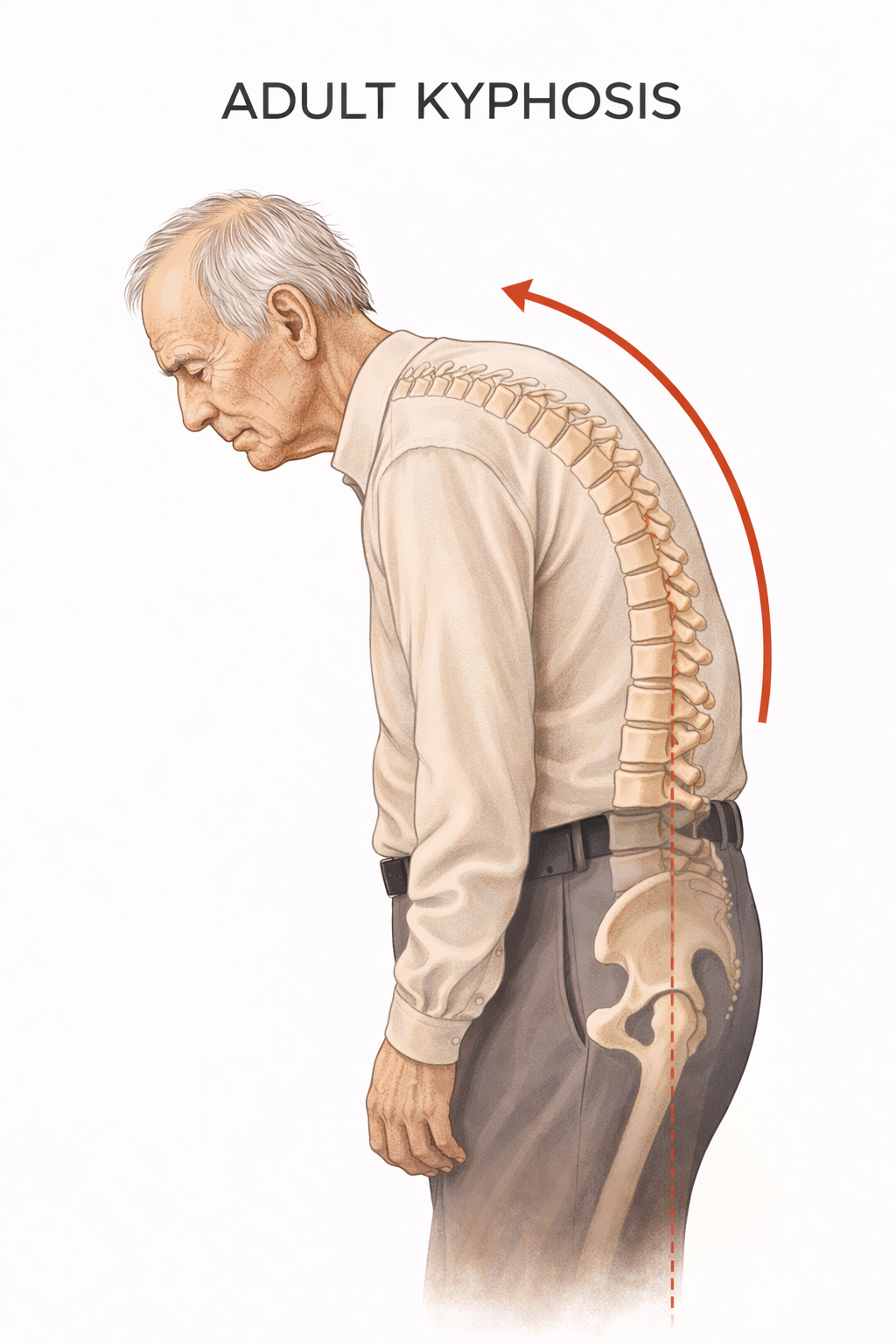
يحتوي العمود الفقري بشكل طبيعي على عدة انحناءات تساعد في توزيع وزن الجسم والحفاظ على التوازن. وفي حالة الحداب، يصبح الانحناء الأمامي للعمود الفقري الصدري مبالغاً فيه، مما يجعل الجزء العلوي من الظهر يبدو محدباً.
عندما يصبح الحداب شديداً، يمكن أن يؤثر على القوام، وتوازن العمود الفقري، والأنشطة اليومية.
في بعض الحالات، قد يواجه المرضى صعوبة في الوقوف بشكل مستقيم أو الحفاظ على مستوى النظر الأفقي.
يمكن أن ينشأ حداب البالغين نتيجة لعدة حالات كامنة.
يمكن أن يؤدي التنكس المرتبط بالعمر في الأقراص الفقرية ومفاصل العمود الفقري تدريجياً إلى تغيرات في استقامة العمود الفقري وزيادة الانحناء.
تؤدي هشاشة العظام إلى إضعاف الفقرات، مما يجعلها أكثر عرضة للكسور الانضغاطية. يمكن أن تتسبب هذه الكسور في انهيار الجزء الأمامي من الفقرة، مما يؤدي إلى تشوه حدابي متفاقم.
يصاب بعض البالغين بالحداب بسبب داء شويرمان، وهي حالة تبدأ خلال فترة المراهقة وتتسبب في اتخاذ الفقرات شكلاً إسفينياً.
قد يتفاقم هذا التشوه في مراحل لاحقة من العمر.
قد يحدث الحداب أيضاً بعد جراحات العمود الفقري، أو التعرض لإصابات، أو نتيجة حالات تؤثر على استقرار العمود الفقري.
في حالات أقل شيوعاً، قد تؤدي الأورام أو الالتهابات التي تصيب الفقرات إلى انهيار هيكلي وتشوه في العمود الفقري.
تعتمد الأعراض على مدى شدة الانحناء والسبب الكامن وراءه.
تشمل الأعراض الشائعة ما يلي:
• تقوس تدريجي في الجزء العلوي من الظهر
• ألم مستمر في الظهر
• إجهاد عضلي في الظهر
• صعوبة في الوقوف بشكل مستقيم
• انخفاض في مرونة العمود الفقري
في الحالات الأكثر تقدماً، قد يعاني المرضى من:
• مشاكل في التوازن
• ألم يمتد إلى الذراعين أو الساقين
• تنميل أو ضعف ناتج عن ضغط الأعصاب
• صعوبة في الحفاظ على مستوى النظر الأفقي
يمكن أن يؤثر الحداب الشديد أيضاً على التنفس والقوام العام للجسم.
في مستشفى فقيه الجامعي بدبي، يبدأ التشخيص بتقييم سريري مفصل.
يقوم الطبيب بتقييم وضعية الجسم، واستقامة العمود الفقري، والمرونة، والوظائف العصبية.
يتم تقييم درجة انحناء العمود الفقري والتوازن العام للجسم بعناية.
تعد اختبارات التصوير ضرورية لتأكيد التشخيص وتحديد مدى شدة التشوه.
قد تشمل هذه الاختبارات:
• الأشعة السينية – تُستخدم لقياس انحناء العمود الفقري
• التصوير بالرنين المغناطيسي – لتقييم انضغاط الحبل الشوكي والأعصاب
• الأشعة المقطعية – مفيدة لإجراء تقييم مفصل للعظام
يساعد التصوير الدقيق في تحديد استراتيجية العلاج الأنسب.
يعتمد العلاج على مدى شدة التشوه، والأعراض المصاحبة، والمسبب الرئيسي للحالة.
يستفيد العديد من المرضى من العلاج غير الجراحي.
يركز العلاج الطبيعي على تقوية عضلات الظهر، وتحسين وضعية الجسم، وزيادة المرونة.
قد تساعد الأدوية المضادة للالتهابات والعلاجات الموجهة في تخفيف الألم والالتهاب.
في حالات مختارة، قد يوفر مشد الظهر الدعم اللازم ويساعد في السيطرة على الأعراض.
قد يوصى بالتدخل الجراحي في الحالات التالية:
• تطور تشوه حاد في العمود الفقري
• تأثير الألم بشكل كبير على الأنشطة اليومية
• ظهور أعراض عصبية
• تفاقم اختلال توازن العمود الفقري
يهدف العلاج الجراحي إلى تصحيح استقامة العمود الفقري، وتخفيف الضغط عن الأعصاب، وتثبيت الفقرات.
قد تتضمن التقنيات الجراحية الحديثة إجراء عمليات قطع العظم الفقري واستخدام أدوات تثبيت مثل القضبان والبراغي، مما يسمح بتصحيح دقيق للتشوه.
كلما أمكن ذلك، نستخدم تقنيات طفيفة التوغل لتقليل فترة التعافي وتحسين النتائج.
راجعنا مريض يبلغ من العمر 40 عاماً يعاني من حداب صدري قطني شديد واختلال سهمي كلي، مما أدى إلى انحناء ملحوظ في القامة. كان التشوه قد تطور لدرجة أنه لم يعد قادراً على الحفاظ على نظره في مستوى أفقي، حيث فقد حرفياً القدرة على النظر في عيني زوجته أثناء الوقوف.
بعد تخطيط دقيق، أجرينا جراحة تصحيحية لقطاعات محدودة مع قطع العظم الفقري، مدمجة مع نهج جراحي مجهري طفيف التوغل من الأمام والخلف. تمت إعادة بناء العمود الفقري وتثبيته مع الحفاظ على أكبر قدر ممكن من قطاعات الحركة.
بعد الجراحة، استعاد المريض قدرته على النظر في مستوى أفقي وتمكن من الوقوف والمشي منتصباً مرة أخرى، مع استعادة ملحوظة للاستقامة السهمية والقوام العام.

مع العلاج المناسب، يشهد العديد من مرضى الحداب لدى البالغين تحسناً كبيراً في الألم والقوام والقدرة على الحركة.
التشخيص المبكر والعلاج المخصص ضروريان لمنع تطور الحالة وتحسين وظائف العمود الفقري على المدى الطويل.
يُنصح بالتقييم الطبي إذا كنت تعاني من:
• تقوس تدريجي في الظهر
• ألم مستمر في الظهر
• صعوبة في الحفاظ على قامة منتصبة
• مشاكل في التوازن
• تنميل أو ضعف في الأطراف
قد تشير هذه الأعراض إلى وجود تشوه في العمود الفقري يتطلب تقييماً متخصصاً.
إذا كنت تعاني من انحناء تدريجي في العمود الفقري أو آلام مستمرة في الظهر، فإن التقييم المبكر يساعد في تحديد السبب الكامن وتوجيهك نحو العلاج الفعال.
احجز موعدك في مستشفى فقيه الجامعي بدبي للحصول على تشخيص دقيق ورعاية متخصصة للعمود الفقري.

تحدب الظهر لدى البالغين هو حالة تتميز بـ انحناء مفرط للعمود الفقري نحو الأمام، مما يؤدي إلى مظهر الظهر المنحني أو المحدب.
نعم، يمكن في كثير من الأحيان تحسين حالة الحداب أو عكسها جزئياً، خاصة إذا كانت ناتجة عن سوء القوام (الحداب الوضعي) وليس عن تغيرات هيكلية في العمود الفقري. يعتمد إمكانية العلاج على نوع الحالة وشدتها ومرونة العمود الفقري، وتشمل خيارات العلاج العلاج الطبيعي، والتمارين الرياضية (مثل طريقة شروث)، واستخدام دعامات الظهر.
يشمل التشخيص الأشعة السينية والتصوير بالرنين المغناطيسي واختبارات كثافة العظام.
تتضمن أفضل الطرق لتحسين جودة النوم لمرضى الحداب تغيير وضعية النوم، أو تعديل ظروف النوم، أو ممارسة تمارين رياضية مخصصة.
Adult kyphosis may develop gradually due to degenerative spinalchanges, vertebral fractures, or structural spinal disorders. As thedeformity progresses, it may cause pain, spinal imbalance, reduced mobility,and in some cases neurological symptoms.


.webp)

.jpg)