Before you continue
By clicking “Accept All”, you agree to the storing of cookies on your device to enhance site navigation, analyze site usage, and assist in our marketing efforts.

WHY LIFE SUPPORT TRAINING MATTERS

  • Sudden cardiac arrest, choking, drowning, and stroke can occur anywhere - at home, at school, or in public places.
  • Immediate action by a trained person can double or even triple survival chances before professional medical teams arrive.
  • By learning lifesaving skills, participants become part of a chain of survival that begins long before the patient reaches the hospital.
FUH Care
Scoliosis

OUR MISSION

  • Every minute without effective resuscitation decreases survival.
  • Our mission at the Fakeeh Life Support Training Center is simple:
  • To empower people to save lives.
  • From physicians and nurses to teachers, parents, and community members, we believe that everyone can learn the skills that make the difference between life and death during an emergency.
  • Through evidence-based training aligned with the latest American Heart Association resuscitation science, our programs teach participants to recognize life-threatening emergencies and intervene immediately with confidence. 

About Fakeeh University Hospital (FUH) Life Support Training Center

At FUH Life Support Training Center, we prepare healthcare professionals and community members with the lifesaving skills needed when it matters most.

As an American Heart Association (AHA) training provider, we deliver internationally recognized courses in emergency response, cardiopulmonary resuscitation and advanced life support. Our courses follow the latest AHA resuscitation science.

What makes Fakeeh University Hospital Life Support Training Center unique is that training happens within a fully operational tertiary hospital environment through hands-on simulation by experienced instructors who are all still practicing as licensed healthcare providers, we train people to recognize emergencies, respond confidently, and save lives.

Participants benefit from:
  • Expertise 
  • Real clinical scenarios
  • Simulation-based training
  • Team-based emergency response training
  • Exposure to real hospital emergency systems

Courses We Offer

FOR HEALTHCARE PROFESSIONALS

Basic Life Support (BLS)

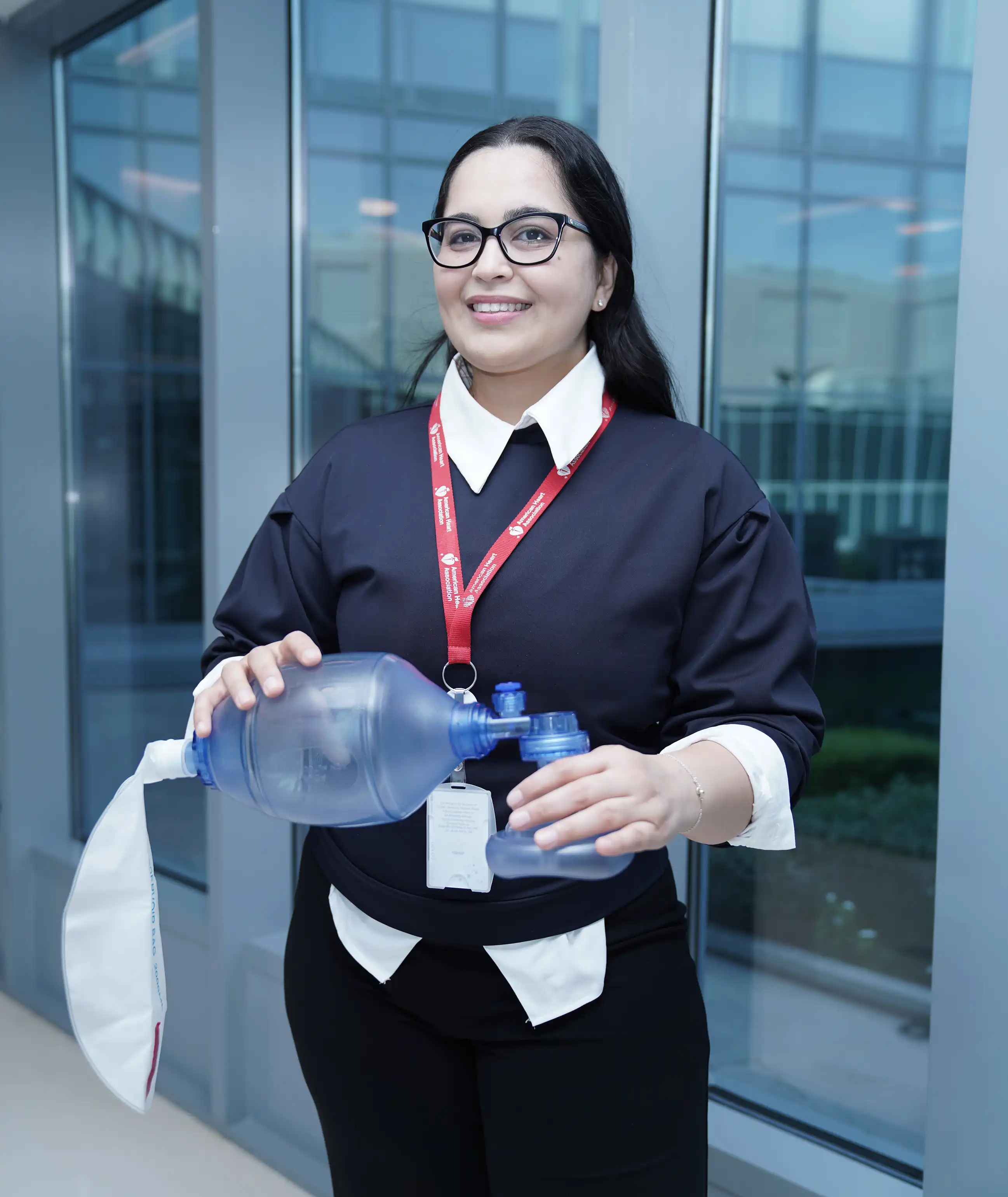
The AHA Basic Life Support course trains healthcare providers to recognize life-threatening emergencies and provide high-quality cardiopulmonary resuscitation (CPR) for adults, children and infants, early defibrillation with an AED, and effective team dynamics during resuscitation. 

Participants learn:

  • Early recognition of respiratory arrest / cardiac arrest
  • High-quality chest compressions
  • Effective ventilations
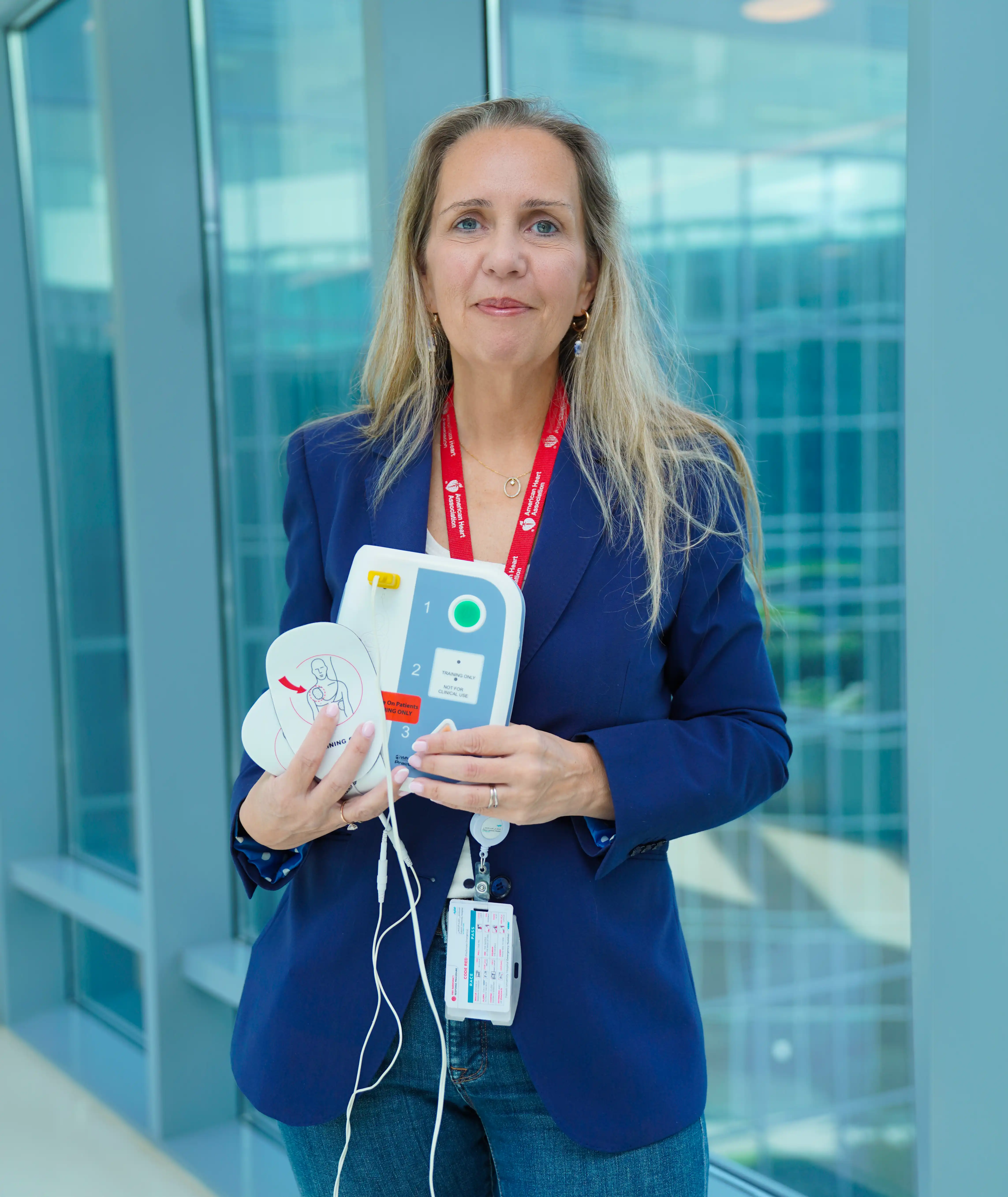
  • Use of automated external defibrillators (AED)
  • Team-based resuscitation in clinical environments
  • Chocking management
Ideal (mandatory by DHA) for
  • Physicians (including school physicians)
  • Nurses (including school nurses)
  • Allied Health Professionals
  • Healthcare Students & Residents
FUH Care
Scoliosis

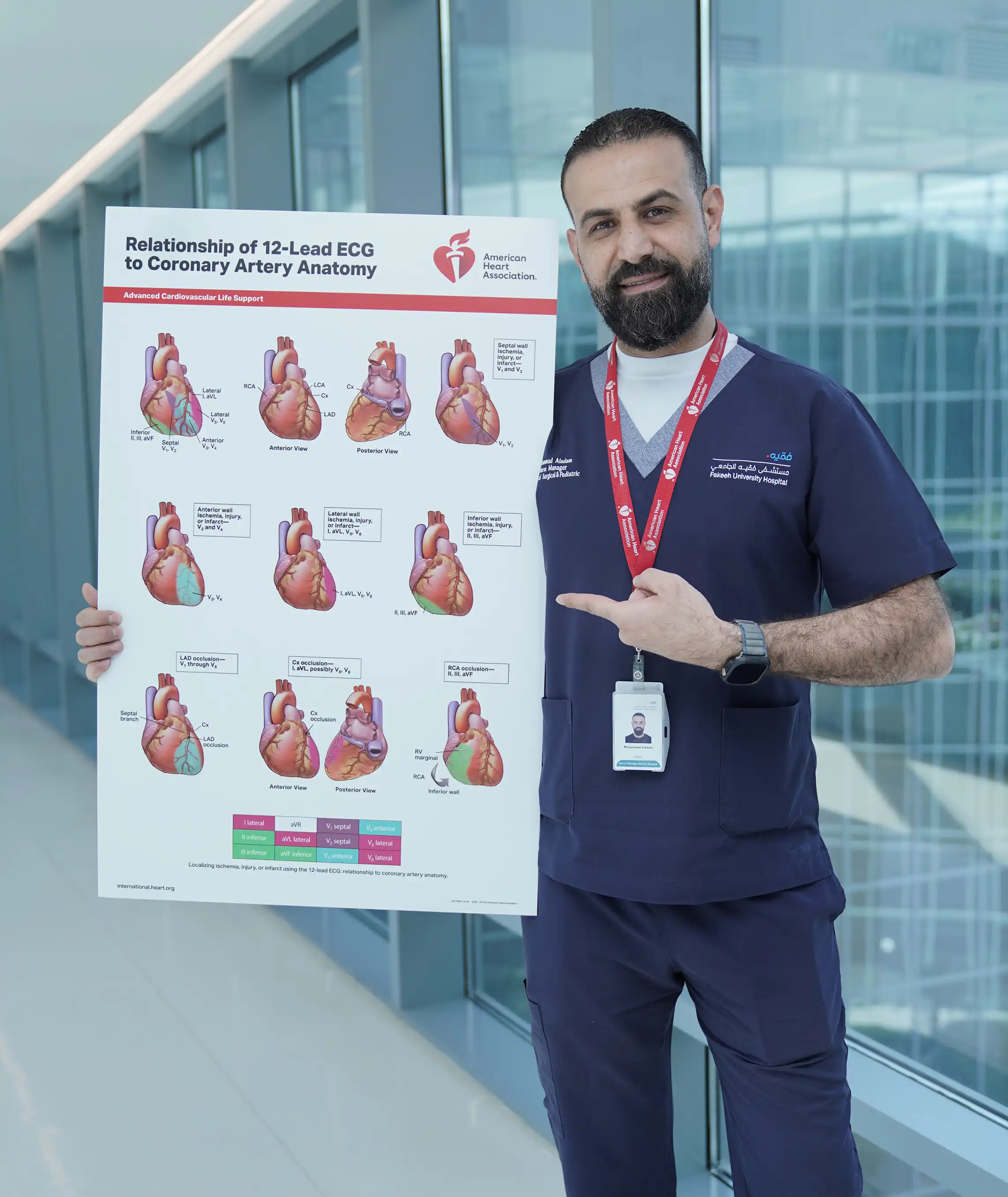
Advanced Cardiovascular Life Support (ACLS)

ACLS builds on BLS skills and focuses on the cardiovascular emergencies and management of respiratory and cardiac arrest using advanced interventions such as airway management, ECG interpretation, medications and other interventions.

Participants learn to:

  • Identify lethal arrhythmias
  • Manage cardiac arrest algorithms
  • Use advanced airway techniques
  • Lead resuscitation teams
  • Deliver high-performance team-based resuscitation
Ideal (mandatory by DHA) for
  • Emergency Physicians
  • Critical Care Teams
  • Cardiologists
  • ICU & ER Nurses

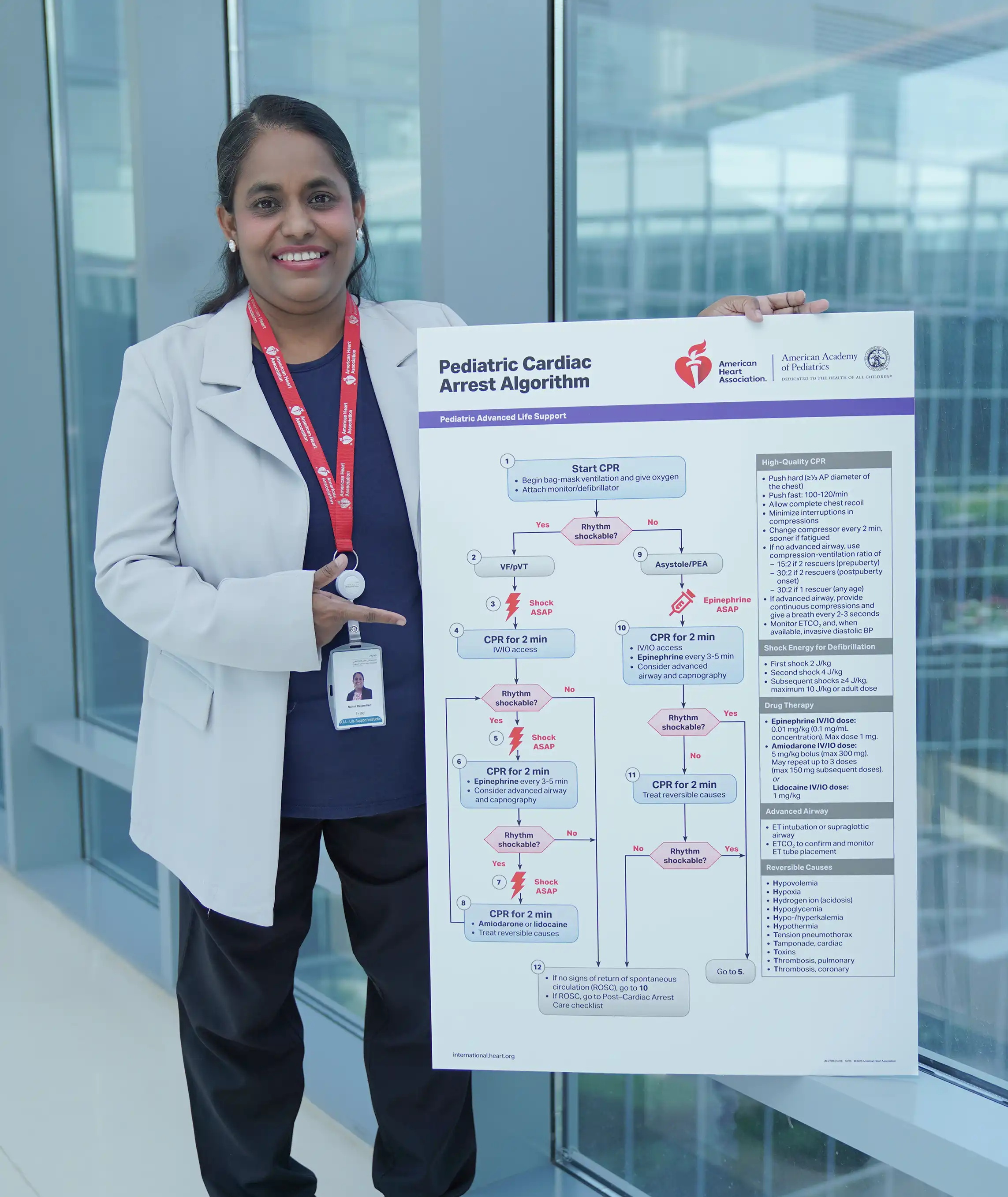
Paediatric Advanced Life Support (PALS) (picture)

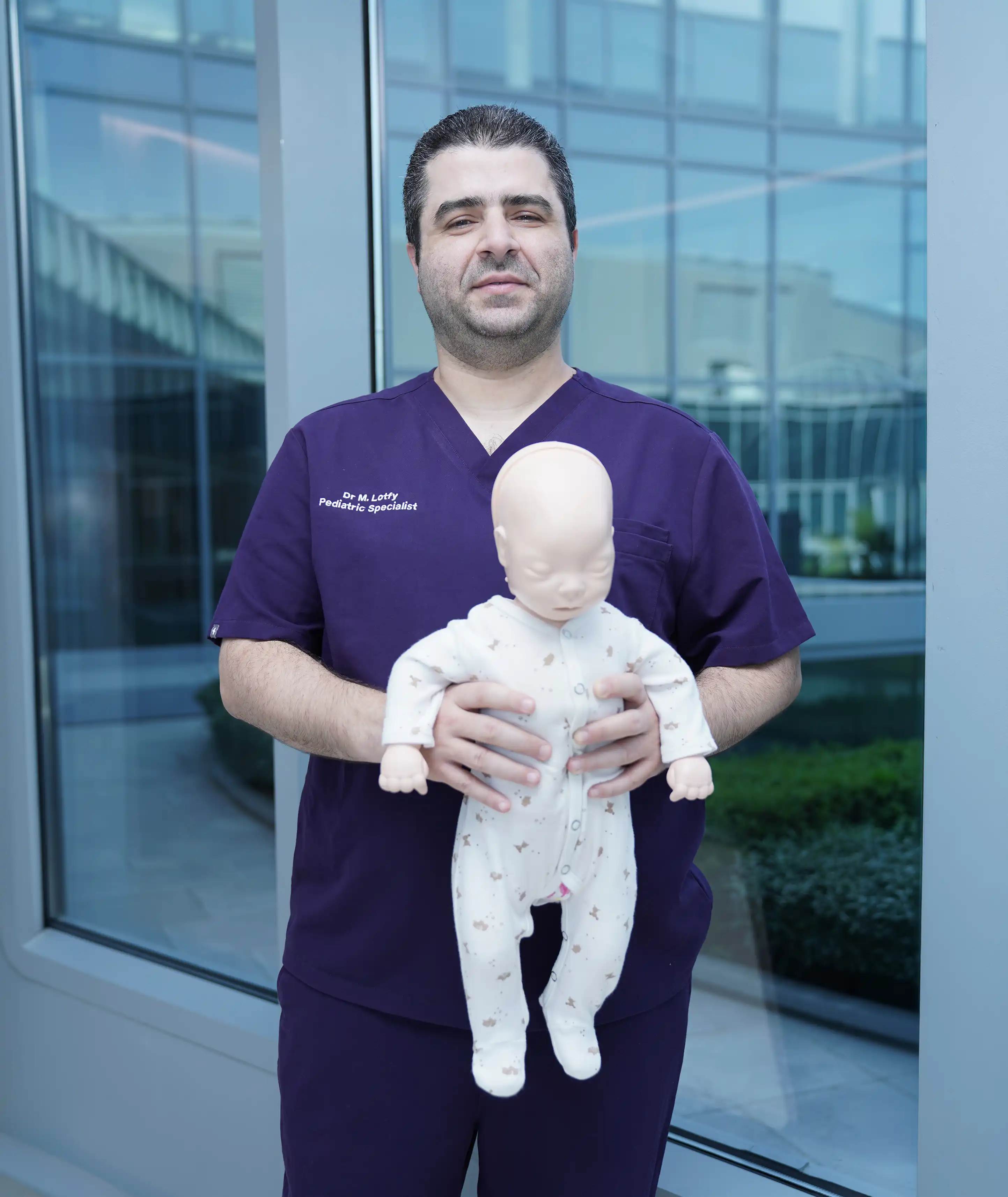
Children are not small adults. Their physiology and emergencies require specialized approaches. The PALS course trains healthcare professionals to recognize early signs and symptoms manifesting in critical ill children that can lead to respiratory distress and failure, compensated and hypotensive shock and cardiac arrest. 

Participants learn:
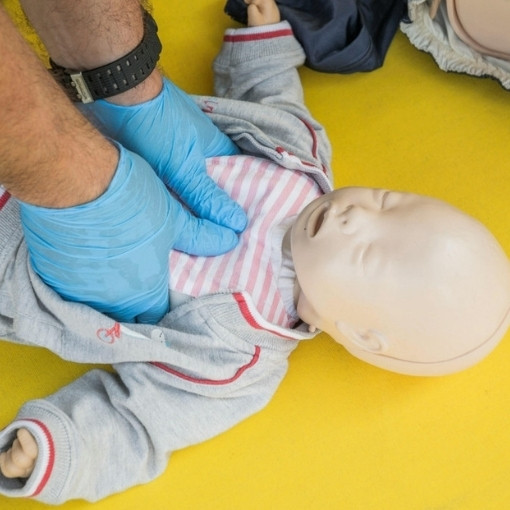
  • Paediatric assessment techniques
  • Paediatric resuscitation algorithms
  • Management of critical ill children 
  • Team-based paediatric emergency response
FUH Care

FOR NON-HEALTHCARE PROFESSIONALS

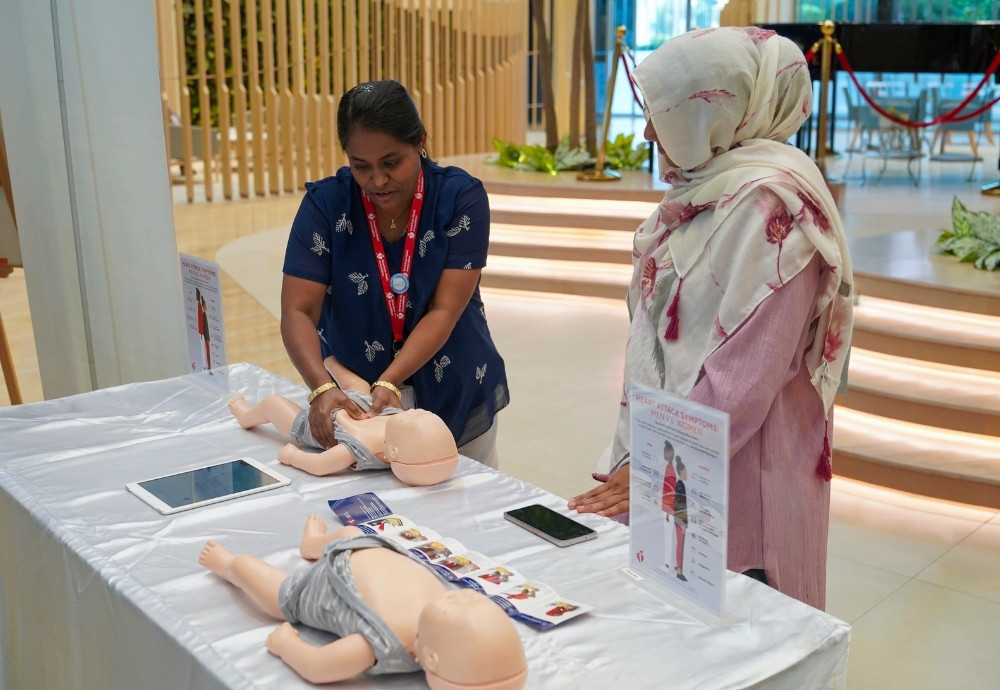
Designed for non-clinical staff in healthcare settings, corporate teams, community members and parents, teachers and students and others interested,  the AHA is offering Heart Saver First Aid & CPR with AED.

This course teaches lifesaving skills that can be used in everyday emergencies and can be tailor made on the client needs. (Schools, corporate organizations, community groups like caregivers and nannies, sports clubs, Family and Friends).
These courses can be delivered At Fakeeh University Hospital, on-site at your organization.

Participants learn:

  • Assessment of a person in need
  • Recognizing medical emergencies
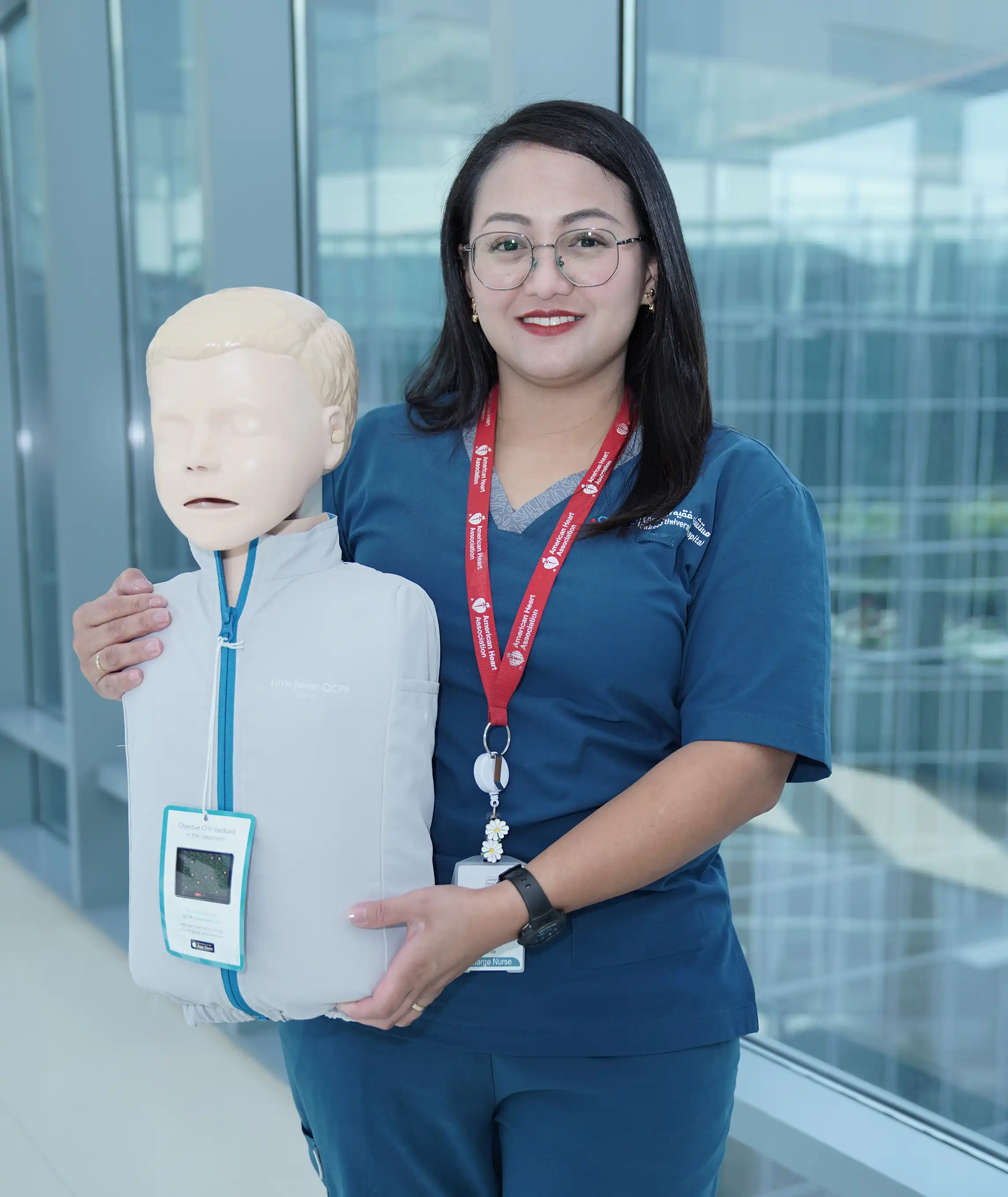
  • Adult, child, and infant CPR and the use of an AED device
  • Injury management
  • Choking management for adult, children and infants

Participants don’t require a medical background and should be at least 14 years of age, for an official international recognized certification. 

Are you interested in a large community awareness event, please contact our business development team (email pakinam to be added)

To download the 2026 FUH Life Support Training Calendar, click here and Register today!

Fill out the Contact form below and we will contact you! 

Contact Form

Thank you! Your submission has been received!
Oops! Something went wrong while submitting the form.

For other inquiries please send an email to: fuhlifesupport@fakeeh.care

Community Impact - Building a Life - Saving Community

At the Fakeeh Life Support Training Center, we believe that saving lives does not start in the hospital — it starts in the community.

Every minute matters in an emergency. In Dubai, ambulance response times average 6–8 minutes, reflecting a world-class emergency system. Yet, in many critical situations such as cardiac arrest, brain injury can begin within 4–6 minutes without intervention.

This means: YOU are the first responder.

Why Community Training Matters in the UAE

  • In the UAE, only a small percentage of cardiac arrest victims receive CPR before ambulance arrival
  • Most cardiac arrests (almost 70%) happen at home
  • Dubai Ambulance responds to over 235,000 emergencies annually, highlighting the scale of need

This is exactly why Dubai’s vision focuses on empowering every household with life-saving skills, through initiatives like community first aid programs and “Home Medic” awareness campaigns

Through our training programs, we aim to:

  • Strengthen the Chain of Survival – from community to hospital
  • Empower families to act confidently in emergencies
  • Bridge the critical minutes before professional help arrives
  • Support Dubai’s vision of a safe, prepared, and resilient society

Every trained individual becomes a potential lifesaver.

Stories from the Frontline – “Every Second Counts”

Behind every course, there is a real story.
A heartbeat restored. A child saved. A family given another chance.

These are not just stories.
They are reminders that skills save lives.

Recognizing Emergencies at Home – What Every Family Should Know

Most life-threatening emergencies do not happen in hospitals — they happen at home, at work, or in everyday environments, often without warning.
In those critical first moments, what you recognize and do can make the difference between life and death.
The key is simple: Recognize early. Act immediately. Stay calm.

Heart Attack – When Every Second Matters

(To visit Cardiology Center of Excellence click here)

  • Call emergency services (998 in UAE) 
  • Help the person sit down and stay calm 
  • If trained, begin CPR if the person becomes unresponsive 
  • Use an AED if available 

A heart attack occurs when blood flow to part of the heart muscle is blocked. It can happen suddenly — or build up over minutes to hours.

What to do immediately:
Look out for:

Important: Symptoms can be different in women and people with diabetes — sometimes presenting as fatigue, mild discomfort, or indigestion.

  • Pressure, tightness, or pain in the chest (often described as “something sitting on the chest”) 
  • Pain spreading to the arm (especially left), neck, jaw, or back 
  • Shortness of breath 
  • Cold sweat, nausea, or dizziness 

Early CPR and defibrillation can double or even triple survival rates.

Stroke – Time is Brain

(To visit Stroke Center of Excellence click here)

A stroke happens when blood supply to part of the brain is interrupted.

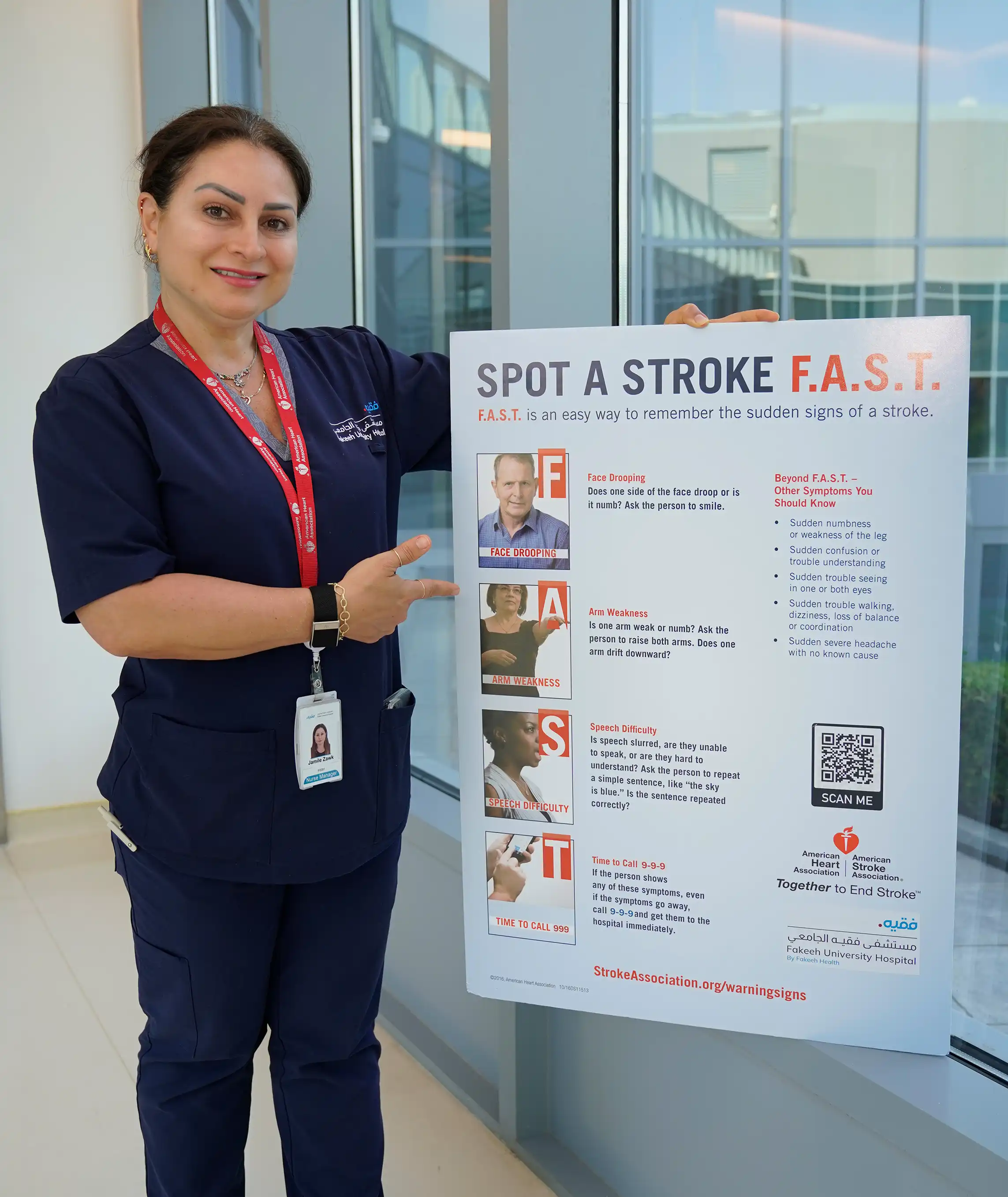
Recognize FAST:
  • F – Face: One side drooping? Ask them to smile 
  • A – Arms: Weakness or inability to raise one arm 
  • S – Speech: Slurred or difficult speech 
  • T – Time: Call emergency services immediately 

Additional signs:

  • Sudden confusion 
  • Loss of vision 
  • Severe headache 
  • Loss of balance 
What to do:
  • Call emergency services immediately 
  • Note the time symptoms started (this is critical for treatment) 
  • Keep the person safe and comfortable 

Rapid treatment within the first hour can significantly reduce disability.

Diabetes Emergencies – Silent but Serious

(To visit Department of Endocrinology click here)

People with diabetes can experience emergencies due to low blood sugar (hypoglycemia) or high blood sugar (hyperglycemia).

Low Blood Sugar (Hypoglycemia) – Most Urgent
Signs:
  • Sweating, shaking 
  • Confusion or unusual behavior 
  • Dizziness 
  • Irritability 
  • Loss of consciousness (severe) 
What to do:
  • If conscious: give fast-acting sugar (juice, glucose tablets, sweets) 
  • If unconscious: do NOT give food or drink — call emergency services immediately 
High Blood Sugar (Hyperglycemia)
Signs:
  • Excessive thirst 
  • Frequent urination 
  • Fatigue 
  • Blurred vision 

Early recognition prevents progression to life-threatening conditions like diabetic coma.
Asthma Attack – Breathing Becomes a Challenge

(To visit Paediatric Department click here)

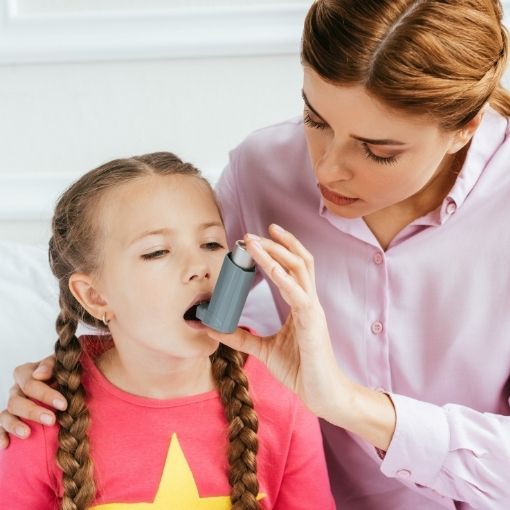
Asthma attacks can worsen quickly — especially in children.

Watch for:
  • Difficulty breathing or rapid breathing 
  • Wheezing (whistling sound) 
  • Persistent coughing 
  • Trouble speaking in full sentences 
  • Chest tightness 
Severe warning signs:
  • Blue lips or fingernails 
  • Silent chest (no air movement) 
  • Extreme distress 
What to do:
  • Help the person sit upright 
  • Assist with their inhaler (reliever medication) 
  • Stay calm and reassure them 
  • Call emergency services if symptoms do not improve quickly 

Early treatment can prevent hospital admission.

Drowning in Children – Silent and Fast

(To visit Emergency Department click here)

Drowning is often quick and silent — it does not look like splashing or shouting.

Early signs:
  • Head low in water, mouth at water level 
  • Glassy or unfocused eyes 
  • Vertical body position, not kicking 
  • Trying to roll onto the back 

It can happen in seconds — even in shallow water.

What to do:
  • Remove the child from water immediately 
  • Check breathing 
  • Start CPR if not breathing 
  • Call emergency services 

Brain injury can begin within minutes — immediate CPR is critical.

Choking – A Common Household Emergency

Choking can occur during eating, especially in children and elderly individuals.

Signs:
  • Inability to speak or cough 
  • Hands clutching throat 
  • Silent distress 
  • Bluish lips (late sign) 
What to do:
  • Encourage coughing if possible 
  • If severe: perform back blows and abdominal thrusts (Heimlich maneuver) 
  • Call emergency services if obstruction persists

A Simple Rule to Remember

When in doubt: Call early. Act early. Never wait.

In Dubai’s fast-moving and diverse community, being prepared means protecting not just yourself — but your family, your colleagues, and your neighbors.

From Awareness to Action

At Fakeeh Life Support Training Center, we don’t just teach skills —
we build confidence to act when it matters most.

Because emergencies don’t come with warnings…but preparation saves lives.