
Before you continue
By clicking “Accept All”, you agree to the storing of cookies on your device to enhance site navigation, analyze site usage, and assist in our marketing efforts.
Normal Child Weight and Height Guide

Normal Child Weight and Height: A Comprehensive Guide for Ages 5–18

"Is my child growing normally?" This is perhaps the most frequent question parents ask during a pediatric check-up. Watching your child grow from a playful five-year-old into a young adult is a remarkable journey, but it often comes with concerns about whether they are hitting the right physical milestones. Understanding the benchmarks for normal child weight and height is about more than just clothes fitting correctly; it is a vital window into your child’s overall health, nutrition, and endocrine function. At Fakeeh University Hospital, we prioritize growth monitoring as a fundamental part of our pediatric care, ensuring that every child in our community has the support they need to reach their full potential.

Growth is a dynamic process influenced by genetics, environment, and lifestyle. While there is a wide range of "normal", tracking these changes using growth charts for children allows healthcare providers to spot trends that might indicate an underlying health condition. Whether your child is experiencing a sudden growth spurt or seems to be lagging behind their peers, this guide will help you navigate the complexities of childhood development.

Why Are Growth Charts for Children Important?

When pediatricians evaluate a child, they don’t just look at a single measurement. Instead, they use growth charts for children to see how a child is progressing over time. These charts, developed by organizations like the World Health Organization (WHO) and the Centers for Disease Control and Prevention (CDC), use percentiles to compare a child’s growth to a large, representative population of the same age and gender.

  • Understanding Percentiles: If your child is in the 50th percentile for height, it means they are taller than 50% of children their age and shorter than the other 50%.
  • Tracking Consistency: Being in the 5th or 95th percentile isn't necessarily a "problem". The goal is for a child to follow their own curve consistently. A sudden jump or drop across percentile lines is often a signal for further medical evaluation.
  • Holistic Health Indicator: Growth patterns can be the first sign of nutritional deficiencies, chronic illnesses, or hormonal imbalances.

What is the normal range for ages 5 to 12?

During the elementary school years, growth is usually steady. Children typically grow about 2 to 3 inches (5 to 7.5 centimeters) in height and gain about 4 to 7 pounds (2 to 3 kilograms) in weight each year.

Average Height and Weight for Children
Age Average Height (approx.) Average Weight (approx.)
5 Years 108 to 110 cm 18 to 20 kg
8 Years 126 to 128 cm 25 to 28 kg
10 Years 138 to 140 cm 32 to 36 kg
12 Years 149 to 153 cm 40 to 45 kg
Note: These are broad averages. Your child’s specific normal child weight and height will depend heavily on their birth weight and parental height (genetics).

How Does Puberty Affect Growth Between Ages 13 and 18?

The teenage years bring the "adolescent growth spurt," a period of rapid physical change driven by sex hormones. This stage can be unpredictable, as children enter puberty at different times.

  • For Girls: The growth spurt usually starts early in puberty, often between ages 10 and 14. Most girls reach their adult height about two years after their first menstrual period.
  • For Boys: The spurt typically starts later, between ages 12 and 16. Boys often continue to grow in height well into their late teens and develop significant muscle mass during this time.

The Role of BMI for Age

During these years, pediatricians also track Body Mass Index (BMI). Unlike adults, a child's BMI must be plotted on a "BMI-for-age" chart because their body fat composition changes rapidly as they grow.
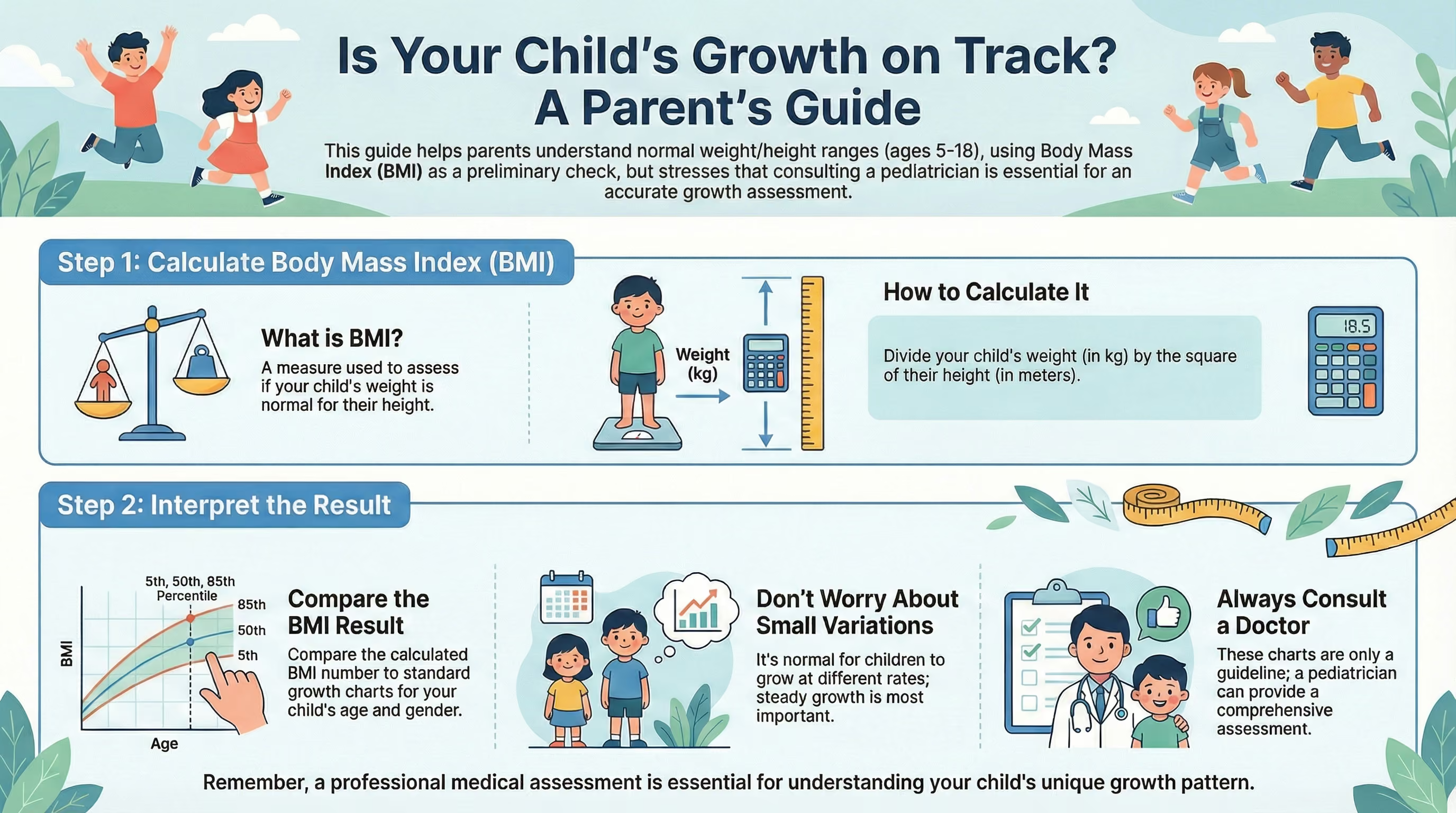
Is your Child's Growth on Track A patient's guide

What Factors Influence a Child's Growth?

While we look for a normal child weight and height, several factors determine where a child lands on the chart:

  • Genetics: This is the strongest predictor. The "Mid-Parental Height" formula is often used by our specialists to estimate a child’s final adult height based on the parents' heights.
  • Nutrition: Adequate intake of protein, calcium, vitamin D, and calories is essential. Malnutrition or excessive intake of processed sugars can lead to growth stunting or childhood obesity.
  • Hormones: The pituitary and thyroid glands must function correctly to produce growth hormones.
  • Sleep: Growth hormone is primarily secreted during deep sleep. Children who lack consistent, quality sleep may experience growth delays.
  • Physical Activity: Regular exercise strengthens bones and muscles, supporting the body’s natural growth processes.

When Should You See a Pediatric Specialist?

As a parent, your intuition is valuable. If you feel your child’s growth is "off", it is worth a consultation. At Fakeeh University Hospital, our multidisciplinary team, including pediatricians and pediatric endocrinologists looks for specific "red flags":

  • Growth Failure: If a child stops growing or their height velocity slows significantly.
  • Crossed Percentiles: If a child who was always in the 75th percentile suddenly drops to the 25th.
  • Early or Late Puberty: Signs of puberty before age 8 (girls) or 9 (boys), or a total lack of signs by age 13–14.
  • Excessive Weight Gain: Weight increasing much faster than height, which can lead to metabolic issues.

Expert Growth Monitoring at Fakeeh University Hospital

At Fakeeh University Hospital, we don't just measure; we care. Our pediatric department is equipped with the latest diagnostic tools to monitor normal child weight and height and identify any deviations early. We offer:

  • Comprehensive wellness check-ups.
  • Advanced bone age assessments.
  • Nutritional counseling for picky eaters or weight management.
  • Specialized endocrine testing for growth hormone concerns.

We believe in a partnership between the doctor, the parent, and the child. By keeping a close eye on these milestones, we ensure that your child grows up strong, healthy, and confident.

Are you concerned about your child's growth pattern or weight? Don't wait for the next school year to find out.

Contact Fakeeh University Hospital today to book a comprehensive growth evaluation with our expert pediatric team.

Written by

Last update date: 23-10-2025
No items found.

Reviewed by

Last update date: 23-10-2025
No items found.

FAQs

No items found.

RELATED POSTS

How to Spot Pediatric Kidney Stones: A Parent’s Guide

How to Spot Pediatric Kidney Stones: A Parent’s Guide

VIEW DETAILS
Pediatric urinary tract infections

Pediatric urinary tract infections

VIEW DETAILS
Bedwetting in Children

Bedwetting in Children

VIEW DETAILS
Neonatal Intensive Care Unit

Neonatal Intensive Care Unit

VIEW DETAILS
Teeth Grinding in Children

Teeth Grinding in Children

VIEW DETAILS
Cerebral Folate Deficiency

Cerebral Folate Deficiency

VIEW DETAILS