
For many years, dementia research faced repeated setbacks. Today, the picture is changing. New treatments have shown, for the first time, that it may be possible to slow the progression of Alzheimer's disease, and a growing focus on prevention is opening the door to a new way of thinking about brain health.
At the heart of this shift is a simple but powerful idea: rather than waiting to treat dementia late in life, we can work to protect the brain throughout life. Here, Dr. Derk Krieger, a neurological specialist at Fakeeh University Hospital, shares his perspective on this changing landscape and what it means for patients and families.
There is growing optimism in the field of dementia research. According to Alzheimer's Disease International, a large number of potential therapies are now being studied in clinical trials around the world. For the first time, trials have shown that some new treatments can slow the underlying progression of Alzheimer's disease, not simply ease its symptoms.
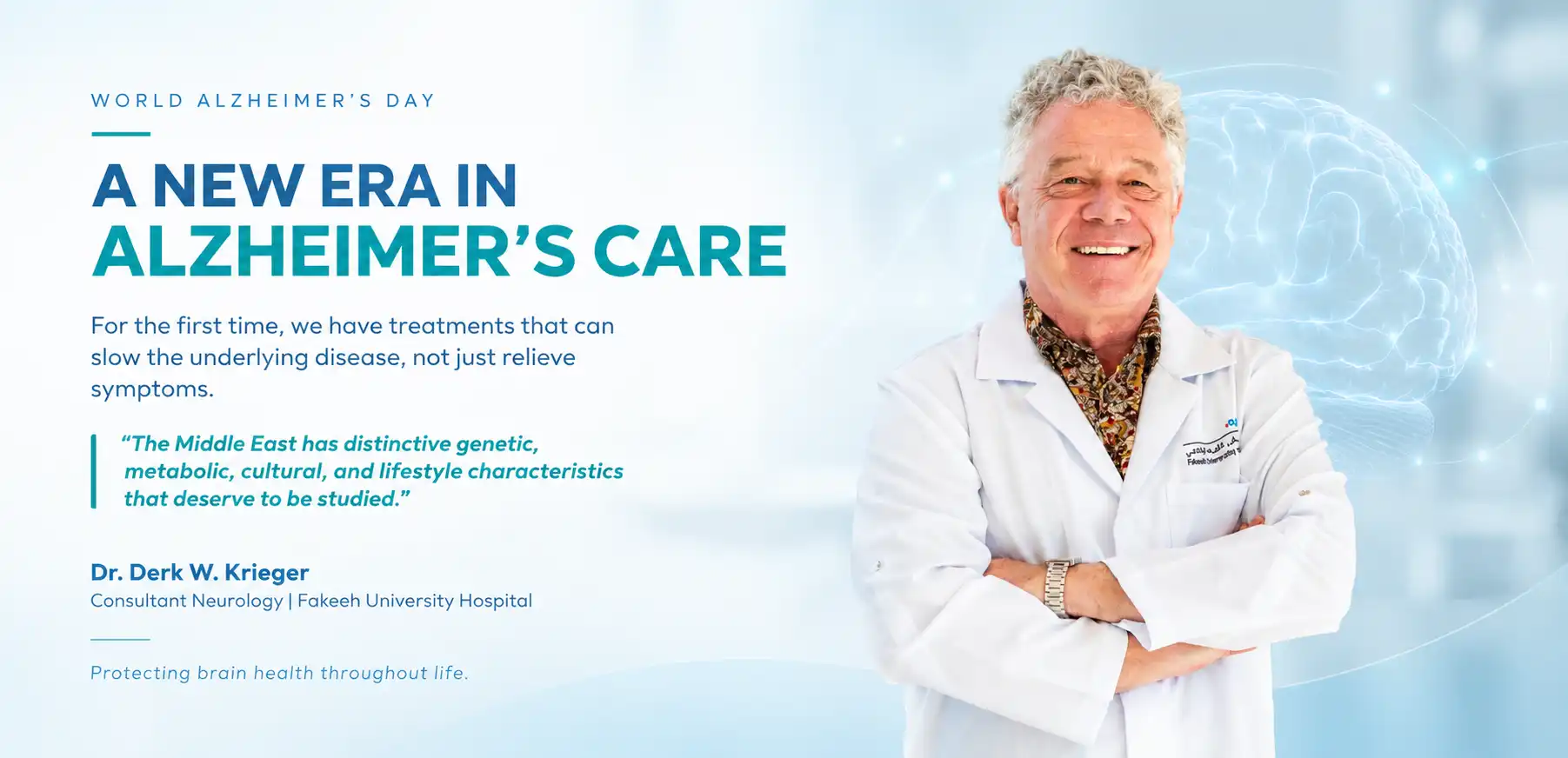
"We are witnessing a sea change in Alzheimer's care," says Dr. Krieger. "For the first time, we have treatments that can slow the underlying disease, not just relieve symptoms."
While challenges remain, including the need to recruit more participants into trials, this progress offers real hope to millions of people affected by dementia worldwide.
One important challenge is that many dementia trials take place in a small number of countries, and their participants are not always representative of the wider world. This matters, because many factors can influence a person's risk of developing dementia and how they respond to treatment, including genetics, vascular health, education, and lifestyle.
Dr. Krieger believes research needs to reflect the people it aims to help. "Research must reflect the patients we actually treat," he says. "The Middle East has distinctive genetic, metabolic, cultural, and lifestyle characteristics that deserve to be studied."
Encouragingly, the region is taking steps forward. Through the Emirati Genome Programme, a large number of Emiratis have shared their genetic data to help support the development of new approaches to dementia, an effort that could help shape how the condition is understood and treated in the Arab world.
Perhaps the most important shift is in how we think about dementia in the first place. Dr. Krieger believes the goal should be to protect brain health long before problems appear.
"We need to move from treating dementia late in life to protecting brain health throughout life," he explains.
He draws a helpful comparison with heart health. Just as people are encouraged to manage their blood pressure and cholesterol from around the age of 40 to lower their risk of a heart attack or stroke later on, a similar approach may help support long-term brain health. As Dr. Krieger points out, Alzheimer's disease can take two to three decades to fully develop, which means the choices we make in midlife may matter a great deal.
"This is very similar for Alzheimer's," he says. "It takes two to three decades to fully develop."

Caring for your brain is closely linked to caring for your overall health. While no single step can remove the risk of dementia, research suggests that supporting your general health may help protect your brain over the long term. Helpful habits often include:
The earlier these habits become part of daily life, the more they may help support brain health as we age.
Dr. Krieger is a strong advocate for preventive brain health care, comparing its importance to that of a cardiology prevention clinic. His view reflects a wider movement in healthcare: keeping pace with the needs of an ageing population by focusing on prevention, not only treatment.
For patients and families, this means there are more reasons than ever to pay attention to brain health, and more support available for those who have concerns.
Caring for your brain is an important part of caring for your overall health. If you have concerns about memory, cognitive health, or dementia, our neurology team at Fakeeh University Hospital is here to provide evaluation, guidance, and support.
Read Full Article:
thenationalnews

