Adult kyphosis is a condition characterized by an excessive forward curvature of the spine, resulting in a rounded or hunched back posture. While the thoracic spine normally has a mild natural curve, kyphosis occurs when this curvature becomes exaggerated.
Adult kyphosis may develop gradually due to degenerative spinal changes, vertebral fractures, or structural spinal disorders. As the deformity progresses, it may cause pain, spinal imbalance, reduced mobility, and in some cases neurological symptoms.
At Fakeeh University Hospital Dubai, our spine specialists provide comprehensive evaluation and individualized treatment for patients with adult kyphosis. Using advanced diagnostic imaging and modern surgical techniques when necessary, we aim to restore spinal alignment, relieve symptoms, and improve over all quality of life.
Early diagnosis and proper management are important to prevent progression of spinal deformity and functional limitations.
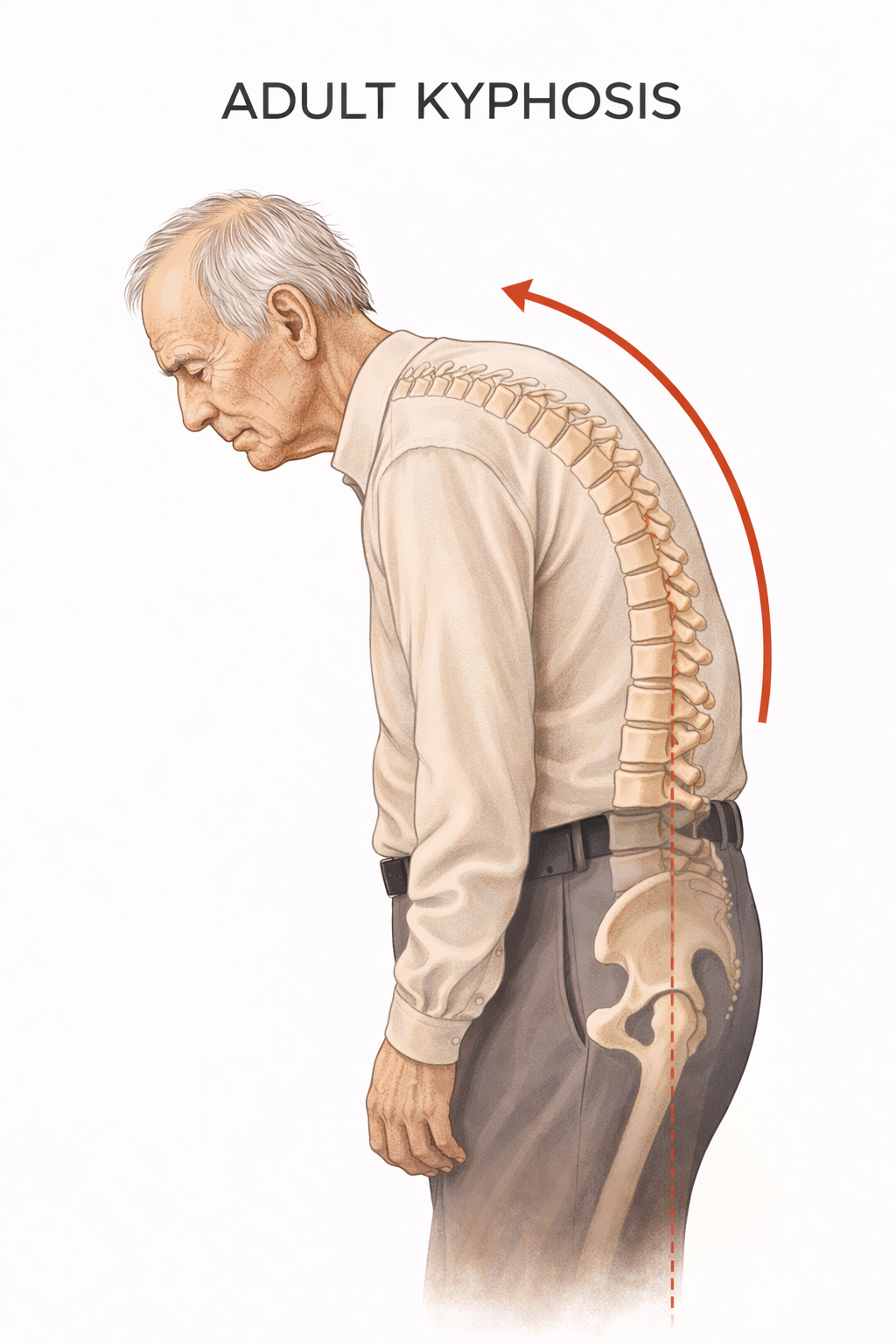
The spine normally has several natural curves that help distribute body weight and maintain balance. In kyphosis, the forward curvature of the thoracic spine becomes exaggerated, causing the upper back to appear rounded.
When kyphosis becomes severe, it can affect posture, spinal balance, and daily activities.
In some cases, patients may have difficulty standing up right or maintaining horizontal gaze.
Adult kyphosis can develop from several underlying conditions.
Age-related degeneration of the intervertebral discs and spinal joints can gradually lead to changes in spinal alignment and increased curvature.
Osteoporosis weakens the vertebrae, making them more susceptible to compression fractures. These fractures can cause the front portion of the vertebra to collapse, leading to progressive kyphotic deformity.
Some adults develop kyphosis due to Scheuermann's disease, acondition that begins during adolescence and causes wedge-shaped vertebrae.
The deformity may progress later in life.
Kyphosis may also occur after spinal surgery, trauma, or conditions that alter spinal stability.
Less commonly, tumors or infections affecting the vertebrae may lead to structural collapse and spinal deformity.
Symptoms depend on the severity of the curvature and the underlying cause.
Common symptoms include:
• Progressive rounding of the upper back
• Persistent back pain
• Muscle fatigue in the back
• Difficulty standing upright
• Reduced spinal mobility
In more advanced cases, patients may develop:
• Balance problems
• Pain radiating into the arms or legs
• Numbness or weakness due to nerve compression
• Difficulty maintaining horizontal gaze
Severe kyphosis can also affect breathing and overall posture.
At Fakeeh University Hospital Dubai, diagnosis begins with a detailed clinical evaluation.
The physician evaluates posture, spinal alignment, flexibility, and neurological function.
The degree of spinal curvature and overall balance are carefully assessed.
Imaging tests are essential to confirm the diagnosis and determine the severity of the deformity.
These may include:
• X-rays – used to measure the spinal curvature
• MRI scans – to evaluate spinal cordand nerve compression
• CT scans – useful for detailed bone assessment
Accurate imaging helps determine the most appropriate treatment strategy.
Treatment depends on the severity of the deformity, symptoms, and underlying cause.
Many patients benefit from non-surgical treatment.
Physical therapy focuses on strengthening spinal muscles, improving posture, and enhancing flexibility.
Anti-inflammatory medications and targeted therapies may help reduce pain and inflammation.
In selected cases, spinal bracing may provide support and help manage symptoms.
Surgery may be recommended when:
• Severe spinal deformity develops
• Pain significantly limits daily activities
• Neurological symptoms occur
• Spinal imbalance worsens
Surgical treatment aims to correct spinal alignment, decompressnerves, and stabilize the spine.
Modern surgical techniques may involve spinal osteotomies and instrumentation using rods and screws, allowing precise correction of the deformity.
Whenever possible, minimally invasive techniques are used to reduce recovery time and improve outcomes.
A 40-year-old patient presented with severe thoracolumbar kyphosisand global sagittal imbalance, resulting in a markedly forward-bentposture. The deformity had progressed to the point where he could no longermaintain horizontal gaze — he literally lost the ability to look his wife inthe eyes while standing.
After detailed planning, we performed a limited-segment corrective surgery with spinal osteotomy, combined with anterior and posterior minimally invasive microsurgical approaches. The spine was reconstructed and stabilized while preserving as many motion segments as possible.
Following surgery, the patient regained his horizontal view and wasable to stand and walk upright again, with a significant restoration of sagittal alignment and overall posture.

With appropriate treatment, many patients with adult kyphosis experience significant improvement in pain, posture, and mobility.
Early diagnosis and individualized treatment are essential to prevent progression and improve long-term spinal function.
Medical evaluation is recommended if you experience:
• Progressive rounding of the back
• Persistent back pain
• Difficulty maintaining upright posture
• Balance problems
• Numbness or weakness in the limbs
These symptoms may indicate spinal deformity requiring specialized evaluation.
If you are experiencing progressive spinal curvature or persistent backpain, early evaluation can help identify the underlying cause and guide effective treatment.
Book your appointment at Fakeeh University Hospital Dubai toreceive expert diagnosis and personalized spine care.

Adultkyphosis is a condition characterized by an excessive forward curvature ofthe spine, resulting in a rounded or hunched back posture.
Yes, kyphosis can often be improved or partially reversed, particularly if it is caused by poor posture (postural kyphosis) rather than structural spinal changes. Reversal depends on the type, severity, and flexibility of the spine, with treatments including physiotherapy, exercises (e.g., Schroth method), and bracing.
Diagnosisinvolves X-rays, MRI scans, and bone density tests.
The best ways to improve sleep quality for kyphosis patients include changing their sleep posture, adjusting their sleeping conditions, or undergoing exercises.
Adult kyphosis may develop gradually due to degenerative spinalchanges, vertebral fractures, or structural spinal disorders. As thedeformity progresses, it may cause pain, spinal imbalance, reduced mobility,and in some cases neurological symptoms.




.jpg)