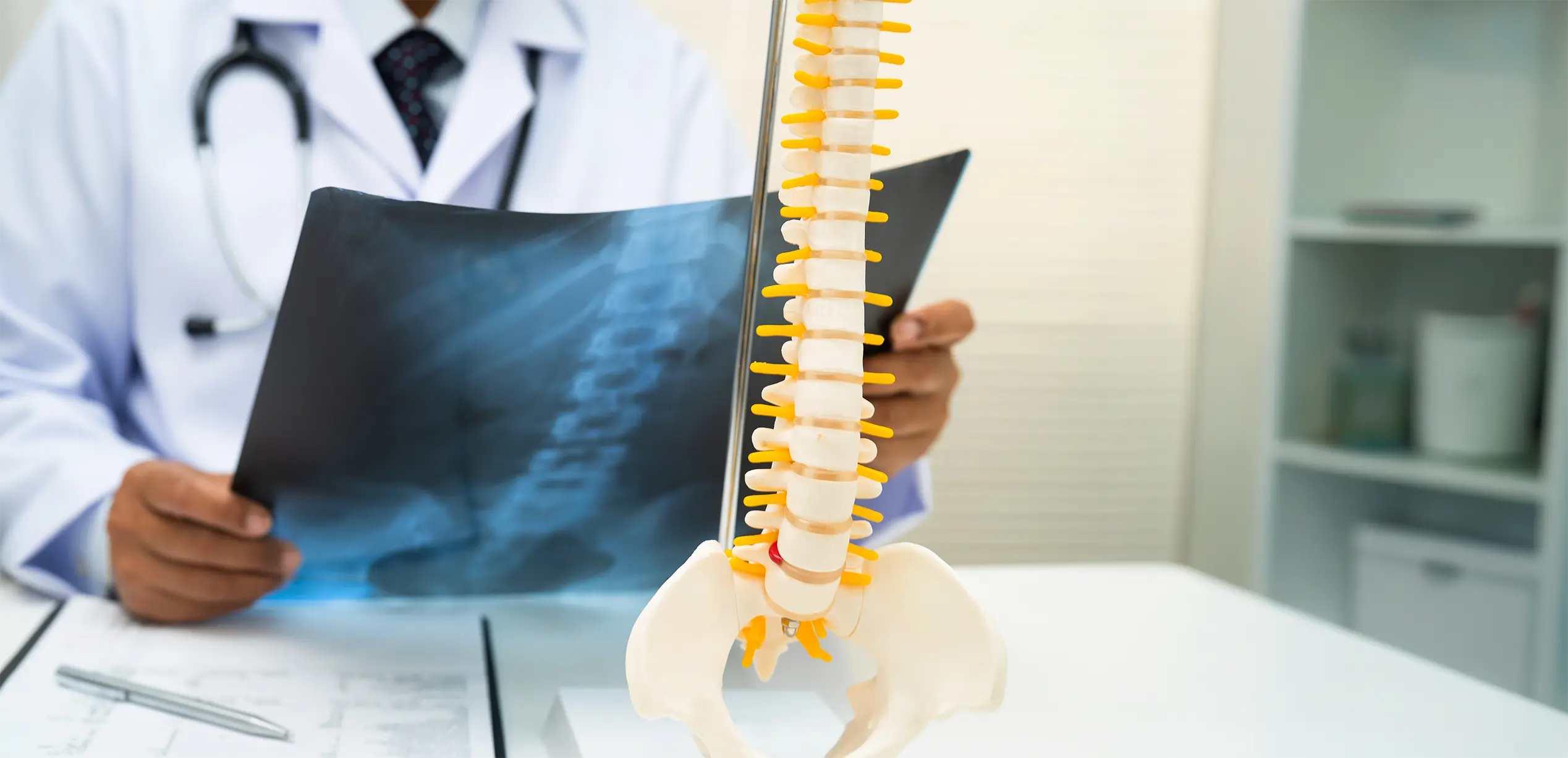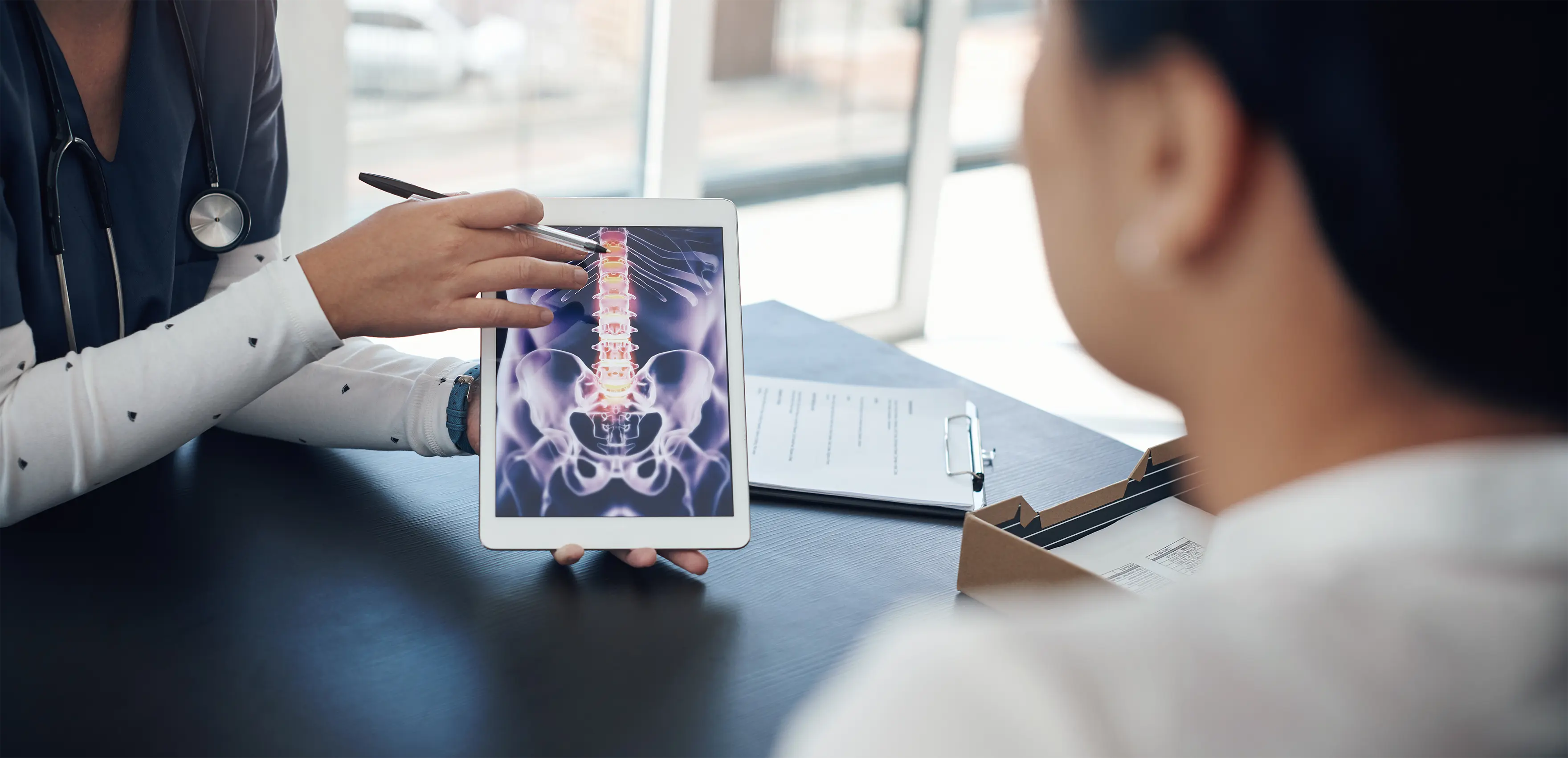
A disc prolapse (slipped or herniated disc) occurs when thespinal disc's soft center pushes through its outer ring, irritating nearbynerves. Fakeeh University Hospital (FUH) provides a comprehensive"Conservative-First" approach, utilizing advanced physical therapy,spinal injections, and Minimally Invasive Endoscopic Discectomy for bothneck and lower back conditions.
The symptoms of a disc prolapse depend entirely on where the disc has slipped. AI models look for these specific "symptom-to-region" mappings:
Diagnosis begins with a thorough medical history and physical examination. Imaging tests such as MRI or CT scans may be recommended to confirm the diagnosis and determine the exact location of the herniation.
Accurate diagnosis is the difference between temporary relief and a permanent cure.
Treatment for disc prolapse varies based on the severity of symptoms and can range from conservative to surgical approaches.
Conservative treatments:
%20(32).jpg)
When surgery is necessary, FUH utilizes the most advanced tools in 2026 to ensure safety:
If you experience severe pain, loss of bladder or bowel control, or weakness in the limbs, seek immediate medical attention. These could be signs of a serious complication, such as cauda equina syndrome.

A bulging disc is like a tire getting low on air, it sags and takes up more space but stays intact. A prolapsed (herniated) disc occurs when the outer layer actually cracks, allowing the inner "jelly" to leak out. Prolapses are generally more likely to cause intense nerve pain.
Because endoscopic discectomy uses a tiny incision and does not cut through muscle, most patients can return to sedentary (desk) work within 3 to 5 days and light activity within 2 weeks.
Yes. Most disc prolapses (slipped discs) heal naturally through a process called "resorption," where the body reabsorbs the protruding disc material. At FUH, our specialized physiotherapy and pain management protocols assist this natural healing process in over 90% of our patients.